

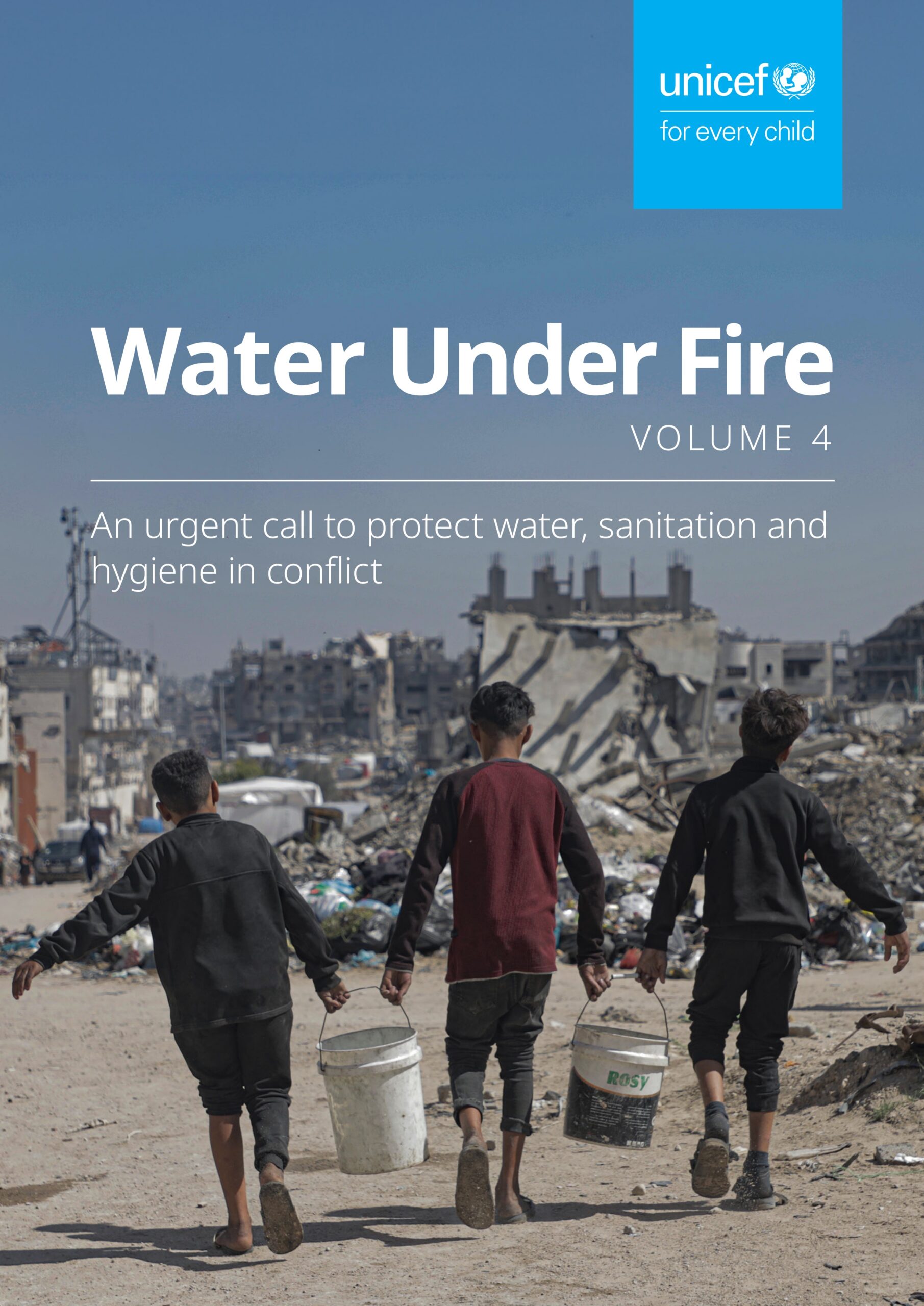
Water Under Fire: An urgent call to protect water, sanitation and hygiene in conflict
This report is part of a series examining the impact of armed conflict on water, sanitation and hygiene systems globally. It identifies patterns of harm to infrastructure, personnel and users, while detailing adaptive approaches and conflict-resilient strategies to maintain essential services in fragile environments to protect children.
Please login or join for free to read more.

OVERVIEW
Overview
The Water Under Fire series, produced by UNICEF, is dedicated to advancing the protection of water as a fundamental means of safeguarding the rights and well-being of children during armed conflicts. This fourth volume in the series provides a comprehensive examination of documented attacks on water, sanitation and hygiene (WASH) systems, services, personnel and users between January 2021 and June 2026. The report identifies and categorises seven distinct types of attacks recorded across 23 countries and territories. It covers direct damage to infrastructure, such as treatment plants and pipelines, as well as indirect impacts through the destruction of energy systems and the obstruction of essential supplies and personnel. By mapping these incidents, the report illustrates the expanding scale and frequency of harm to critical civilian infrastructure globally.
Purpose
The report exists to document the lethal consequences for children and communities when conflict disrupts or destroys essential WASH systems. It serves as an urgent call for parties to conflict, Member States, and humanitarian actors to strengthen the protection of water and comply with international humanitarian law. The document is designed to inform political and operational decisions, providing the evidence needed to elevate the protection of water as a matter of peace and security. It highlights the need to bridge the gap between international norms aimed at protecting civilians and the actual experiences of children on the ground. Furthermore, it aims to promote the endorsement of the Political Declaration on the use of explosive weapons in populated areas (EWIPA) to mitigate civilian harm.
Methodology
The report is based on a mixed-methods review of globally available information and documented incidents between January 2021 and June 2026. The research involved an iterative process of review and triangulation, comparing reports, data sets and published literature across various sources. This was supplemented by key informant interviews with 46 WASH specialists working across 20 countries and 22 global subject matter experts. Consultations were held with two technical advisory groups, including specialists from the ICRC, MSF, WHO, OCHA and the Geneva Water Hub. The analysis categorised attacks based on patterns identified in data sets from Insecurity Insight, the Pacific Institute’s Water Conflict Chronology, and satellite imagery analysis from UNOSAT. Inclusion in the report required a minimum threshold of three documented attacks per country or territory during the reporting period.
Use for finance professionals
For finance professionals, particularly those focused on infrastructure investment, sovereign risk and environmental, social and governance (ESG) factors, this report provides a vital framework for understanding the resilience of critical services in fragile states. The analysis of “reverberating effects” illustrates how damage to physical assets can lead to cascading systemic failures in public health and nutrition, impacting regional stability and human capital development. The findings on conflict-resilient design, such as solar-powered decentralised systems, offer insights into future-proofing infrastructure investments in high-risk markets. Additionally, the report’s data on the interconnectedness of energy and water systems can inform risk modelling for utility investments and sovereign credit assessments in conflict-affected regions, highlighting the importance of business continuity arrangements and resilient supply chains.




