

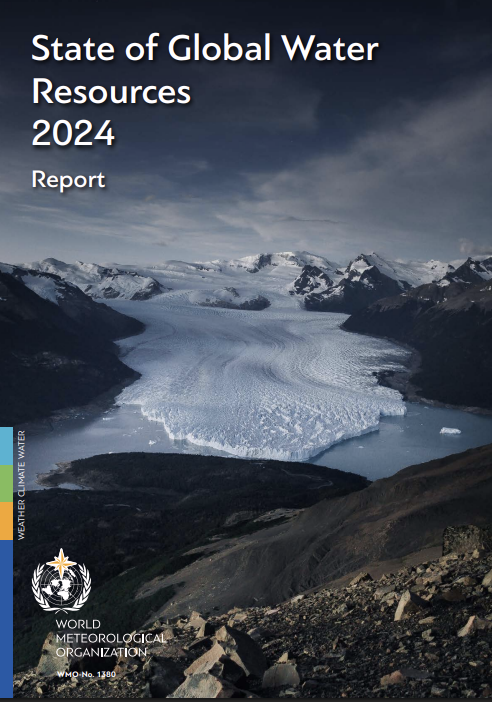
State of global water resources series
The State of Global Water Resources is an annual benchmark series produced by the World Meteorological Organization. It provides a consistent, global overview of freshwater conditions across key components of the hydrological cycle, supporting comparative assessment and decision-making across regions and time.
Please login or join for free to read more.

OVERVIEW
The State of Global Water Resources is an annual benchmark series initiated in 2021 by the World Meteorological Organization. It provides a standardised, global assessment of freshwater conditions across the hydrological cycle, enabling consistent comparison of water resource status across regions and over time.
Purpose
The series is designed to improve transparency and comparability in global water information. It supports evidence-based decision-making by providing a consolidated view of surface water, groundwater, terrestrial water storage, cryosphere components and hydrological extremes at basin, regional and global scales.
Methodology
The benchmark applies a consistent methodological framework each year. It combines observed data contributed by national meteorological and hydrological services with outputs from global hydrological modelling systems and Earth observation data. Current conditions are assessed relative to long-term historical baselines using standardised anomaly classifications, allowing year-on-year comparability.
Scope and consistency
Each edition follows a common structure, indicators and definitions. While the scope has expanded over time to include additional hydrological variables, the underlying approach remains consistent, supporting use as a longitudinal benchmark rather than a one-off report.
Relevance for finance professionals
For finance professionals, the series provides a reliable global reference for assessing water-related physical risk, systemic exposure and regional vulnerability. It can be used to inform climate and nature risk analysis, scenario assessment, portfolio screening, sovereign and infrastructure risk reviews, and engagement on water dependency and resilience across geographies.




