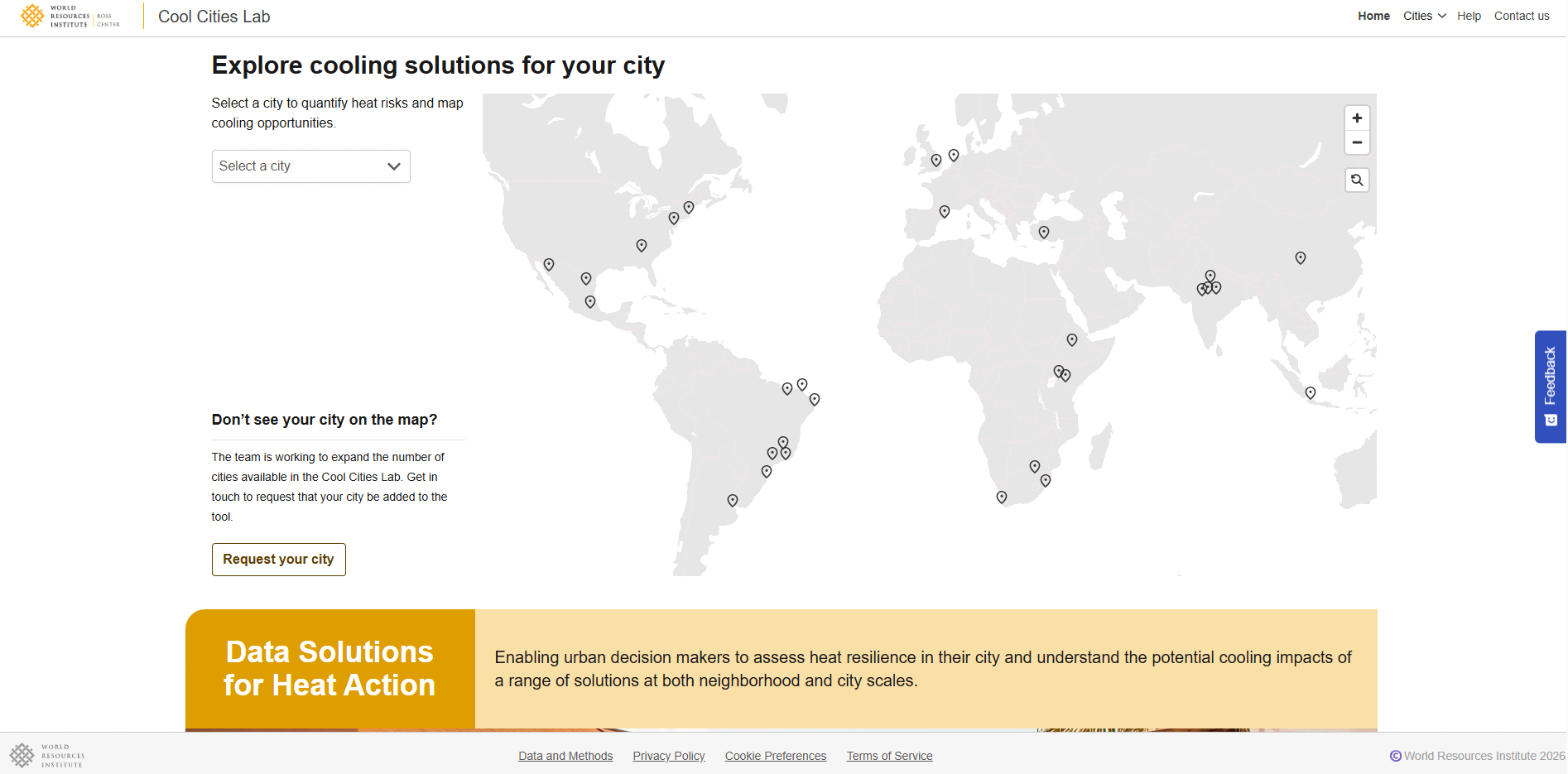
Tools to help cities protect communities from extreme heat
A resource hub from the World Resources Institute providing data and tools for urban planners to mitigate extreme heat risks through cooling strategies and climate adaptation.
Please login or join for free to read more.

OVERVIEW
Tools to help cities protect communities from extreme heat (part of the Cool Cities Lab) is a resource hub designed to assist urban planners and local authorities in mitigating the impacts of rising temperatures. These resources provide data-driven insights to help cities implement cooling strategies, such as urban greening and cool roofs, to protect vulnerable populations and infrastructure. For finance professionals, this tool is relevant for assessing urban climate resilience and the economic benefits of heat mitigation investments.
Organisation behind the tool
The tool is developed and maintained by the World Resources Institute (WRI) through its Cool Cities Lab initiative. The World Resources Institute is a global research organisation that works with governments, businesses, and civil society to address environmental and development challenges.
What the tool does
The tool offers a suite of resources and data platforms that allow users to:
- Identify areas within cities most vulnerable to extreme heat through mapping and heat-risk indicators.
- Evaluate the potential impact of different cooling interventions, such as increasing tree canopy or installing reflective surfaces.
- Access case studies and best practices from other cities that have successfully implemented heat-reduction policies.
- Download datasets and technical guidance for urban climate adaptation planning.
Target audience
The primary audience includes city officials, urban planners, and policy makers responsible for climate adaptation. It is also a valuable resource for researchers, civil society organisations, and sustainability consultants focused on urban resilience.
Relevance to finance professionals
The tool provides critical data for several financial applications:
- Risk assessment – Identifying heat-related physical risks to property portfolios, infrastructure projects, and labour productivity in urban environments.
- ESG analysis – Providing metrics on urban cooling and greening that align with social and environmental reporting frameworks for sustainable cities.
- Investment context – Assessing the long-term viability and cost-benefit ratios of green infrastructure investments and urban redevelopment projects.
- Market insights – Understanding emerging demand for cooling technologies and resilient building materials in heat-stressed markets.