
Library | ESG issues
Environmental
The environmental pillar in ESG (environmental, social, and governance) assesses an organisation’s impact on the planet. It includes issues such as climate change, biodiversity, waste management and water management. Strong environmental practices help businesses reduce risks, comply with regulations, and drive long-term sustainability.
Refine
1899 results
REFINE
SHOW: 16


Hedging ambiguity with pro-social preferences: An illustration from green finance
The paper argues that pro-social preferences can offset ambiguity aversion in green finance by acting as a behavioural hedge. Using ambiguity-based investment models, the authors show socially motivated investors may accept uncertain green assets, lowering effective hurdle rates and supporting private capital flows into sustainable projects.
TNFD Learning Lab
TNFD’s Learning Lab is a free, open-access platform offering self-paced modules on nature-related issues and the TNFD framework. It provides videos, webinars, case studies and practical guidance to help finance and business professionals build capability in nature-related assessment, reporting and decision-making.
Deploying established climate technologies and solutions for buildings
Policy brief outlining market-ready climate technologies for buildings, including heat pumps, insulation, renewable energy systems and circular construction practices. The report highlights financing, policy and capacity barriers, particularly in developing economies, and recommends stronger building codes, targeted funding, and integration of traditional knowledge to accelerate low-emissions, climate-resilient buildings.
Systematic stewardship on the waterbed
Tröger argues corporate governance tools, including stewardship, say-on-climate votes and ESG-linked pay, cannot replace broad climate regulation. Firm-level interventions may trigger “waterbed effects”, shifting emissions rather than reducing them. Carbon pricing or comprehensive emissions caps are presented as more effective.
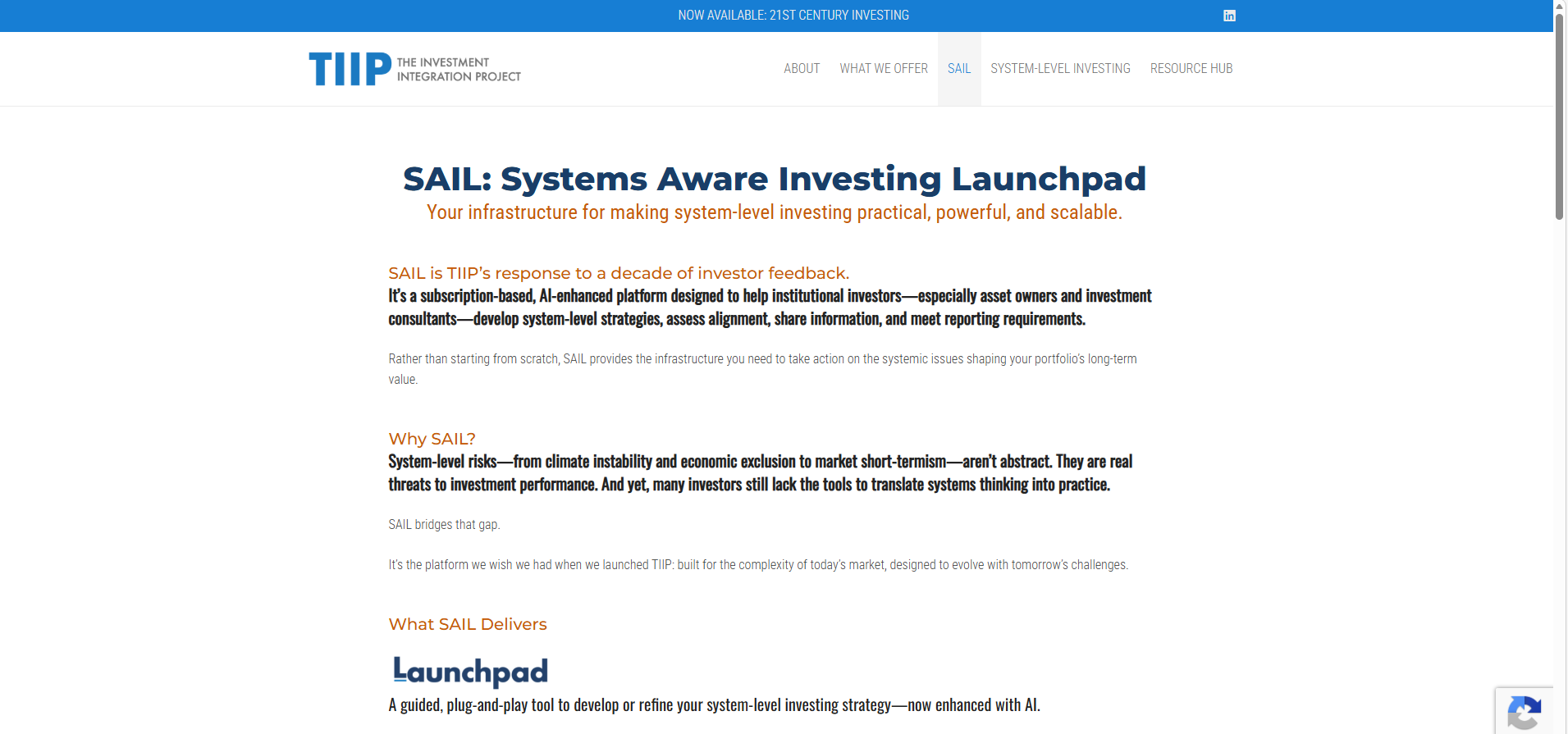
SAIL: Systems Aware Investing Launchpad
SAIL (Systems Aware Investing Launchpad) is an AI-enhanced platform developed by TIIP to support institutional investors in implementing system-level investing strategies. It provides tools for strategy development, benchmarking, reporting and collaboration, helping users assess and manage systemic environmental, social and financial risks.
Tackling governance and financing for sustainability transitions
The report argues current financial systems misallocate capital towards resource-intensive activities, hindering sustainability transitions. It recommends policy, governance and financial reforms to redirect investment towards resource efficiency, low-carbon development and equitable transition pathways, particularly in resource-dependent economies.
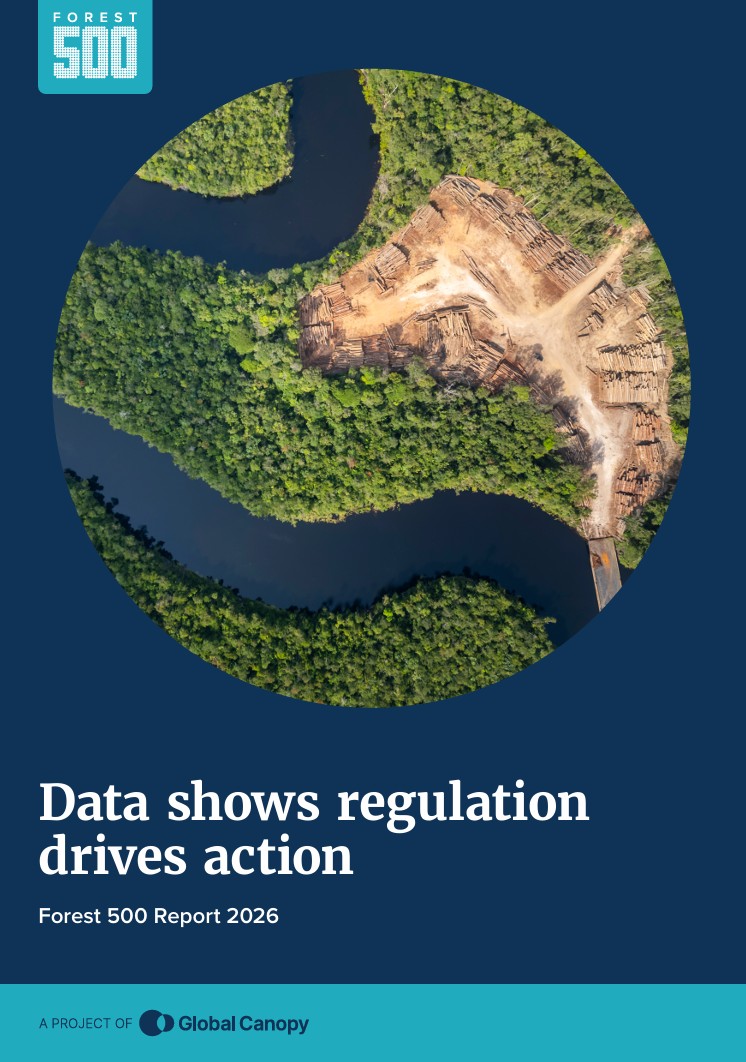
Data shows regulation drives action: Forest 500 report 2026
Forest 500 finds that anticipated EUDR regulation is already driving corporate traceability and deforestation action, though progress remains uneven: only 4% of assessed companies are leaders, 63% show partial action and 33% remain laggards.
Discussion paper on state of nature measurement
Discussion paper outlines integrating state of nature metrics into TNFD, GRI and SBTN frameworks. It proposes embedding consensus metrics from the Nature Positive Initiative across assessment, disclosure, transition planning and target-setting, highlighting ecosystem extent and condition as central to evaluating nature-related dependencies, risks and opportunities.
Mission 300 Progress Portal
Mission 300 Progress Portal is an interactive World Bank tool tracking electrification across Sub-Saharan Africa. It provides data on electricity connections, financing, and project pipelines, supporting analysis of energy access, infrastructure investment, and development finance relevant to ESG and emerging market decision-making.
Navigating the impact valuation landscape: A practitioner’s guide to choosing value factors
A practitioner guide that maps available impact valuation methods and value factor sources, comparing their scope, methodology and use cases. It helps users select appropriate data sources for monetising social and environmental impacts, addressing fragmentation and inconsistencies across existing valuation approaches.
The unseen costs of blue skies: Pollutant substitution and biodiversity loss
China’s PM₂.₅-targeted regulation reduced particulates but increased O₃ via pollutant substitution driven by incentive distortions. Resulting ozone rises increased mortality and reduced biodiversity, offsetting ~24% of policy benefits. Findings highlight welfare losses from narrow performance metrics and the need for multi-pollutant regulation.
Physical risk guide: For asset owners and asset managers
Guide outlines frameworks for assessing, managing and reporting physical climate risks in investment portfolios. It covers exposure mapping, hazard identification, financial impact metrics (e.g. AAL, Climate VaR), scenario analysis, adaptation strategies and regulatory alignment, emphasising integration into governance, risk management and disclosure processes.
The case for pricing pollution: Reducing emissions, strengthening the economy, and delivering a fair share for Australians
The report argues Australia should introduce a Polluter Pays Levy and Fair Share Levy to cut emissions, raise revenue, compensate households, improve productivity, and secure fairer returns from fossil fuel resources.
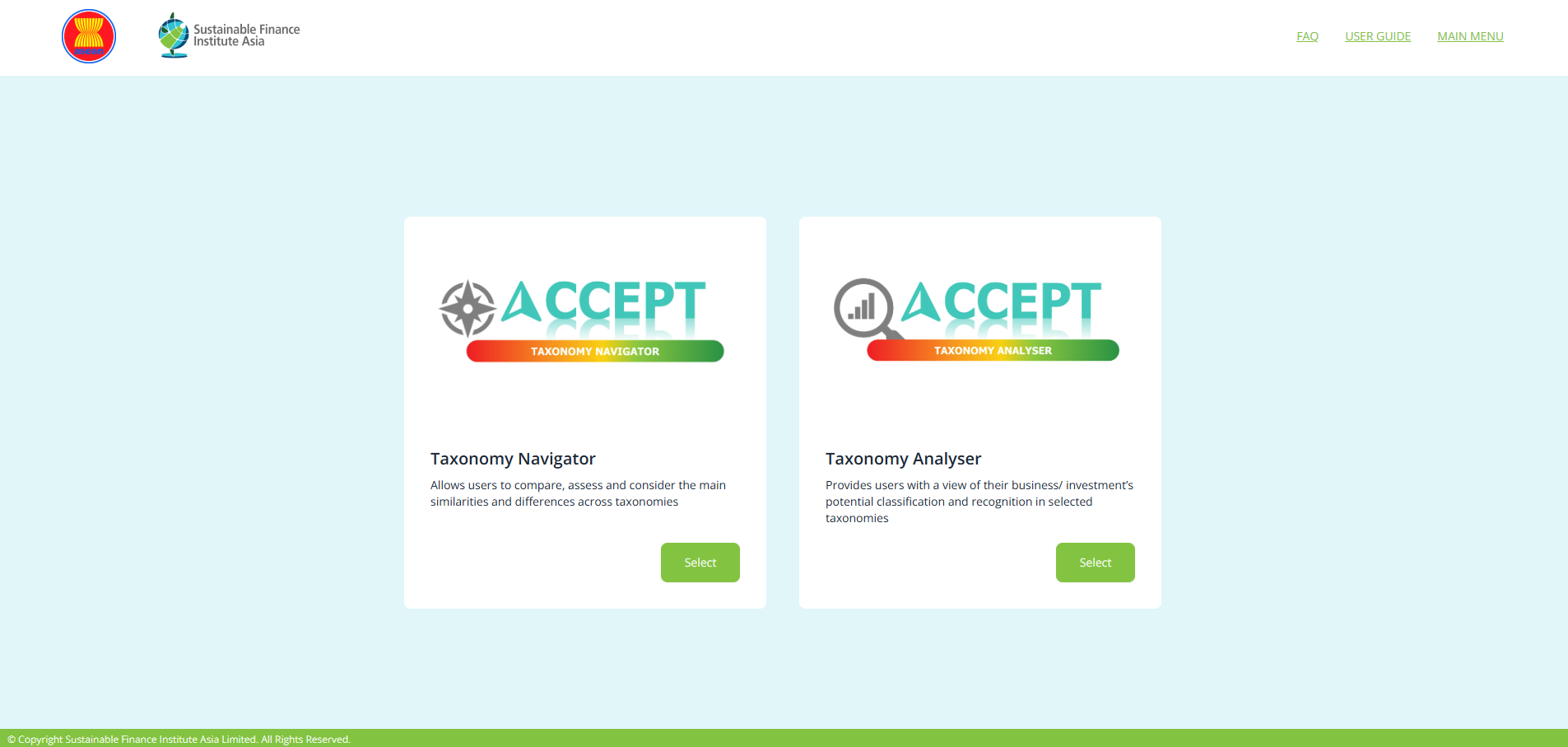
ASEAN Taxonomy Navigator
The ACCEPT Taxonomy Navigator is an online tool that enables users to explore and compare sustainable finance taxonomies, including the ASEAN Taxonomy. It provides a structured view of economic activities and classification criteria, supporting consistent assessment of sustainability alignment and aiding finance professionals in applying taxonomy requirements.
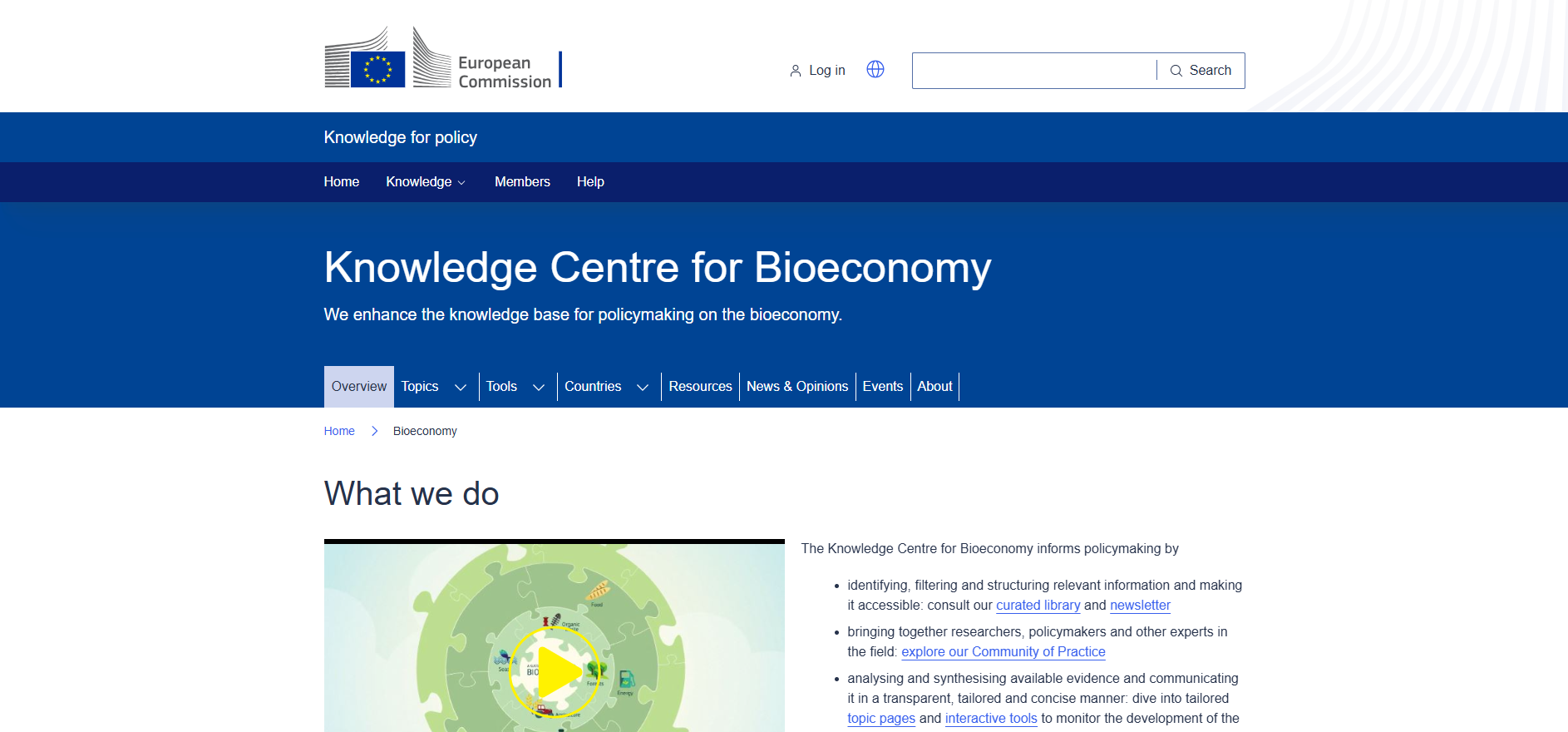
Knowledge Centre for Bioeconomy
The Knowledge Centre for Bioeconomy is a European Commission platform providing curated data, tools and analysis to support evidence-based policymaking. It consolidates research, indicators and policy information on biomass-based sectors, enabling stakeholders to monitor developments and assess the sustainability and economic impacts of the EU bioeconomy.
NatureFinance: Resources & Tools
NatureFinance’s Resources & Tools hub provides a curated collection of reports, briefs and analytical tools focused on mobilising finance for nature-positive outcomes. It covers topics such as bioeconomy development, nature markets and innovative financing structures, supporting investors and policymakers in integrating nature-related considerations into financial decision-making.


