
Library | ESG issues
Technology & Online Harm
Technology & online harm refers to the risks and challenges linked to existing and emerging digital technologies such as AI, blockchain, and cryptocurrencies. While these innovations can enhance efficiency and productivity, they also introduce risks like fraud, misinformation, regulatory uncertainty, and ethical dilemmas, requiring careful oversight and responsible adoption.
Team Altiorem recommends


Refine
135 results
REFINE
SHOW: 16



Artificial intelligence and the future of finance: A framework for structural change
This report examines how artificial intelligence is transforming capital markets by shifting the industry from informational scarcity to analytical abundance. It introduces a structural framework involving capability, adoption, substitution, and recomposition, exploring alternative future states and the evolving nature of fiduciary accountability, market stability, and professional expertise.
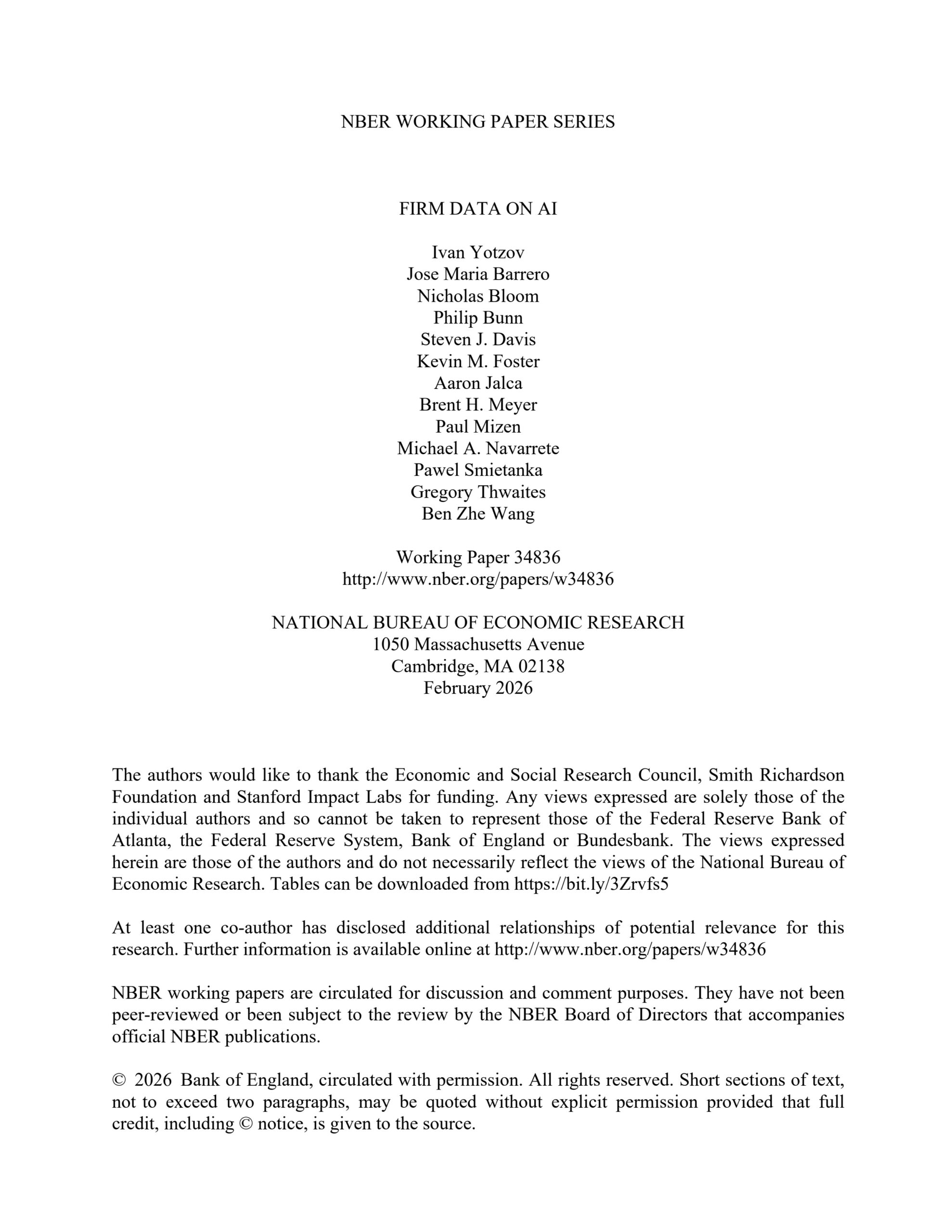
Firm data on AI
This research provides international data on firm-level artificial intelligence adoption across the US, UK, Germany, and Australia. While current impacts on employment and productivity are small, senior executives predict a 1.4 per cent productivity boost and a 0.7 per cent reduction in employment over the next three years.
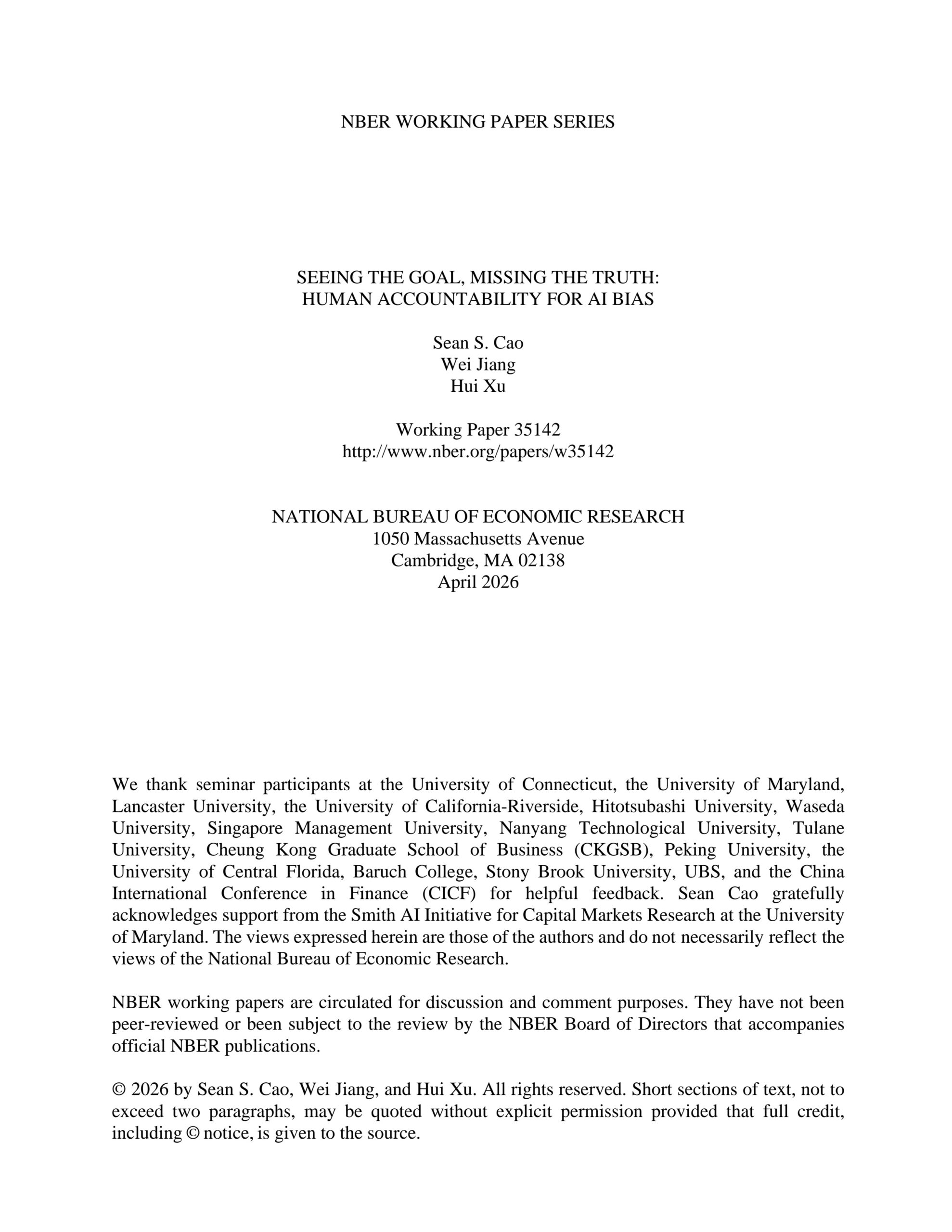
Seeing the goal, missing the truth: Human accountability for AI bias
Research demonstrates that Large Language Models exhibit purpose-conditioned bias when informed of downstream tasks. Goal-aware prompting leads to in-sample overfitting and inflated performance before knowledge cutoffs. Results indicate that disclosing objectives compromises neutrality, necessitating the separation of measurement and evaluation in AI-assisted workflows to ensure statistical validity.

Artificial intelligence and sustainability transitions: Emergent opportunities, risks, and governance
This report examines the intersection of artificial intelligence and sustainability transitions, detailing opportunities and risks across environment, energy, labour, finance, and democracy. It proposes a three-layered governance framework and a phased roadmap for global scientific alignment, interim safety measures, and a binding international framework convention to ensure societal well-being.
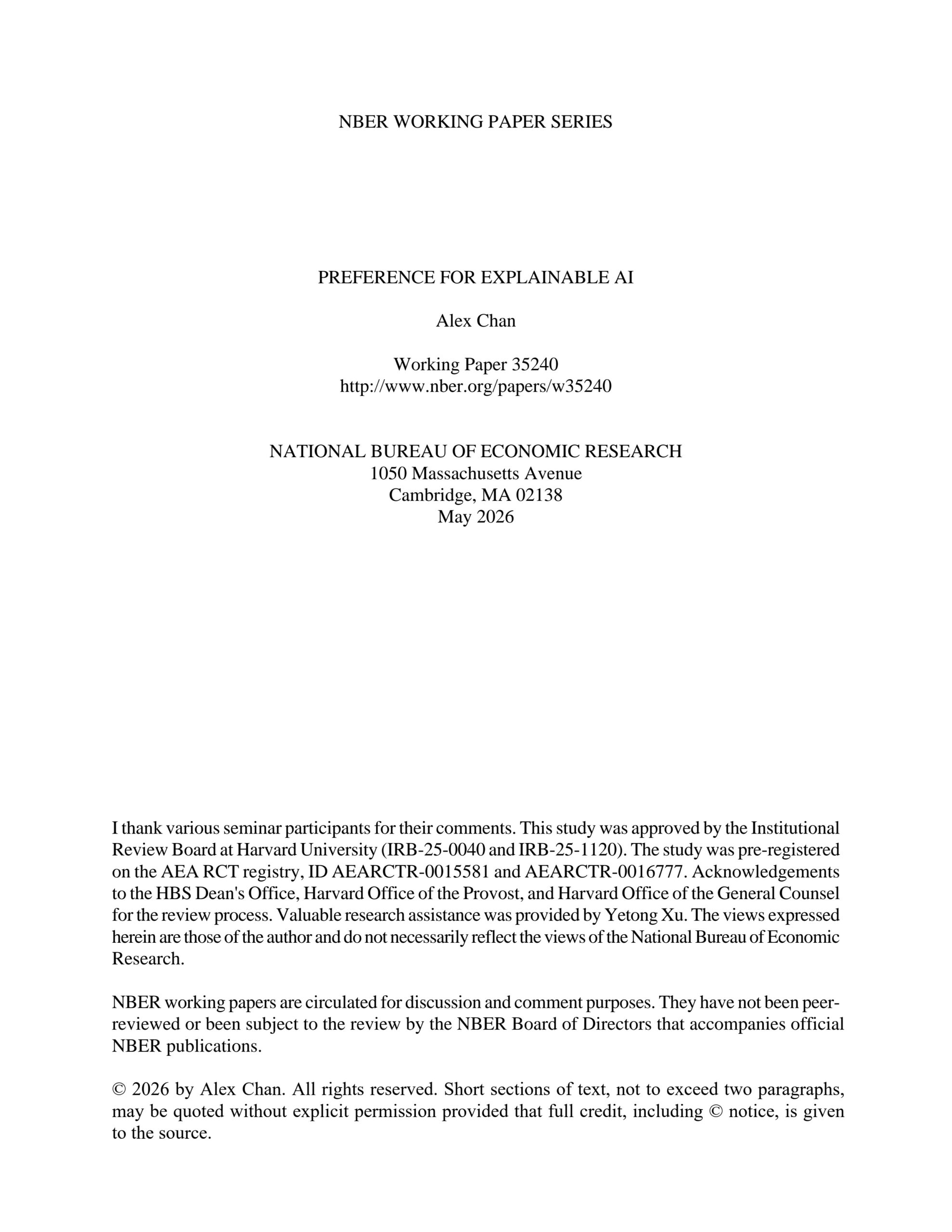
Preference for explainable AI
This research investigates the demand for explainable AI in high-stakes credit settings. It finds that decision-makers strategically avoid explanations that reveal racial or gender bias to preserve moral wiggle room. Additionally, behavioural biases cause individuals to undervalue explanations even when they complement private information and improve decision accuracy.
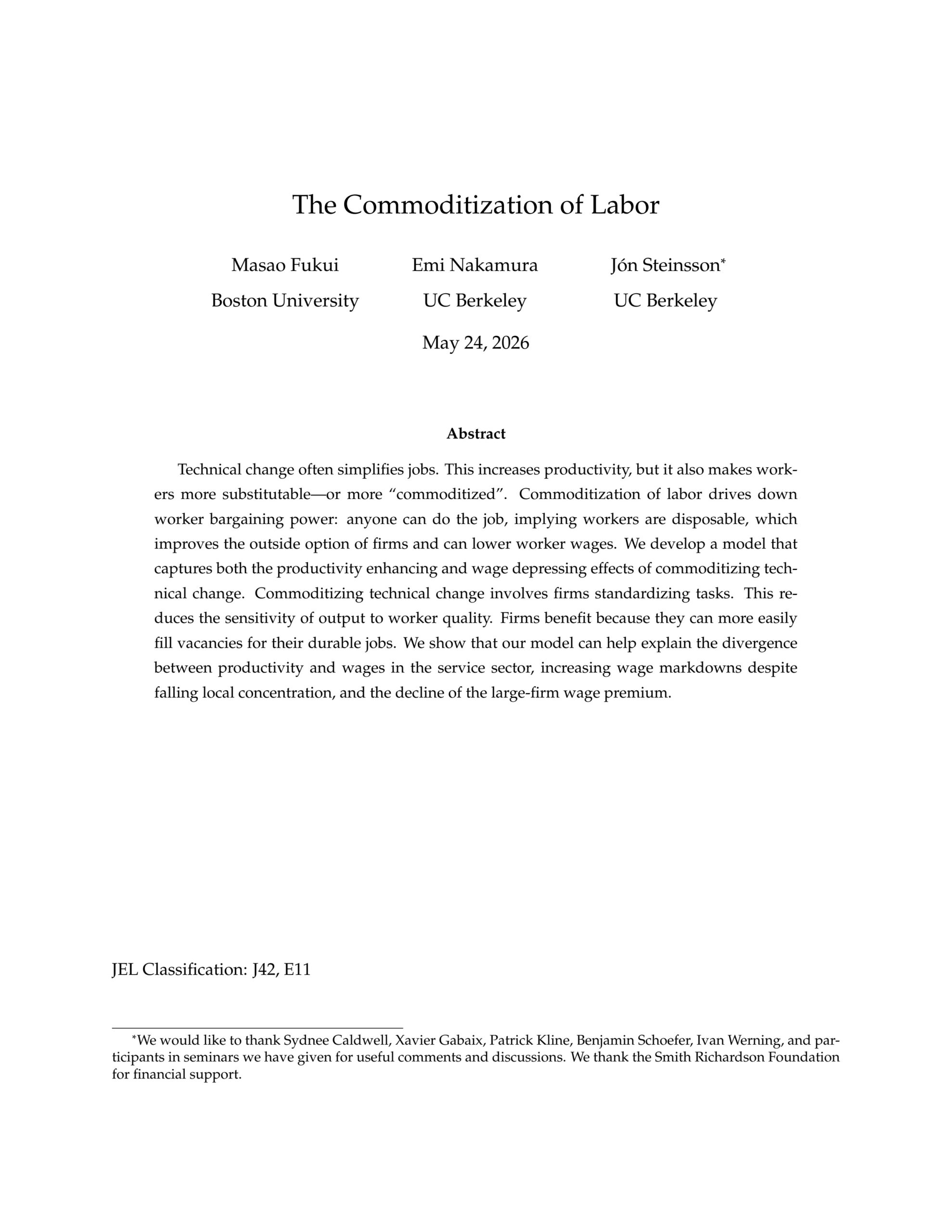
The commoditization of labor
This research examines how technological standardisation commoditises labour by making workers interchangeable. It develops a model showing that while this process increases productivity, it simultaneously reduces worker bargaining power and wages. This framework explains the declining large-firm wage premium and the divergence between productivity and pay in services.

The hidden human cost of content moderation and data labelling
This report examines the hidden human costs of content moderation and data labelling in Colombia, Kenya, and the Philippines. It details systemic physical, psychological, and economic harms caused by lead firm power, informal employment, and intense target pressure, while identifying significant barriers to corporate accountability and worker rights.

Stuck on you: How to make social media good again
This IPPR paper examines how social media platforms have shifted from user-led spaces to algorithm-driven, influencer-dominated environments through 'sticky gatekeeping'. A UK survey found only 18 per cent of feed posts were personal content. The report recommends regulatory reform, algorithmic transparency, and development of a public social media platform.

How a surge in defence and dual-use technology investment could reconfigure the global AI race
This Chatham House paper examines four trends — rising defence and dual-use investment, the growth of 'patriotic tech', the push for sovereign AI, and concerns over an AI valuation bubble — that could multipolarise the global AI race, and offers recommendations for private sector preparedness.
Ranking digital rights: The 2025 big tech edition
The 2025 RDR Index Big Tech Edition ranks 14 major technology companies on governance, freedom of expression, and privacy. Microsoft leads overall with 50%, followed by Alphabet at 49% and Meta at 47%. Scores are also assessed across eight thematic lenses, including algorithmic transparency, security, and targeted advertising.
Ranking digital rights: The 2026 Telco giants edition
Ranking Digital Rights' 2026 Telco Giants Edition scores 12 major telecom companies on governance, freedom of expression, and privacy. Telefónica leads overall with 57%, while Ooredoo ranks lowest at 14%. Historical data from 2017 to 2026 shows varied progress, with scores dipping in 2020 due to new indicators.

Update: Tech firms’ responses to our call for action to protect children
This report assesses tech firms' responses to regulatory demands for improved online child safety. Despite new duties, children remain exposed to harmful content via personalised feeds. While some platforms committed to enhanced age assurance and grooming protections, further action is required to enforce minimum age policies effectively.

Digitalisation and innovation: Opportunities and risks for financial health
This report examines the impact of digital innovation on financial health. It outlines opportunities in payments, credit, savings, and insurance, whilst highlighting emerging risks such as fraud, overindebtedness, and ill-suited investments. The authors propose policy responses to enhance regulatory frameworks and promote responsible digitalisation in financial services.

Frontier AI auditing: Toward rigorous third-party assessment of safety and security practices at leading AI companies
This report proposes a rigorous framework for third-party auditing of frontier AI systems to verify safety and security claims. Addressing the opacity of current self-assessments, it advocates for structured AI Assurance Levels, deep access to non-public information, and continuous monitoring to enable confident deployment and standardisation across the industry.
Acceleration is not a strategy: A framework for directing AI towards public value before it's too late
This report outlines a framework for European governments to steer artificial intelligence towards public value rather than just accelerating sector growth. It recommends implementing AI directionism by targeting high-impact uses, preparing priority sectors for adoption, curbing big tech monopolies, and ensuring the economic benefits are broadly shared.
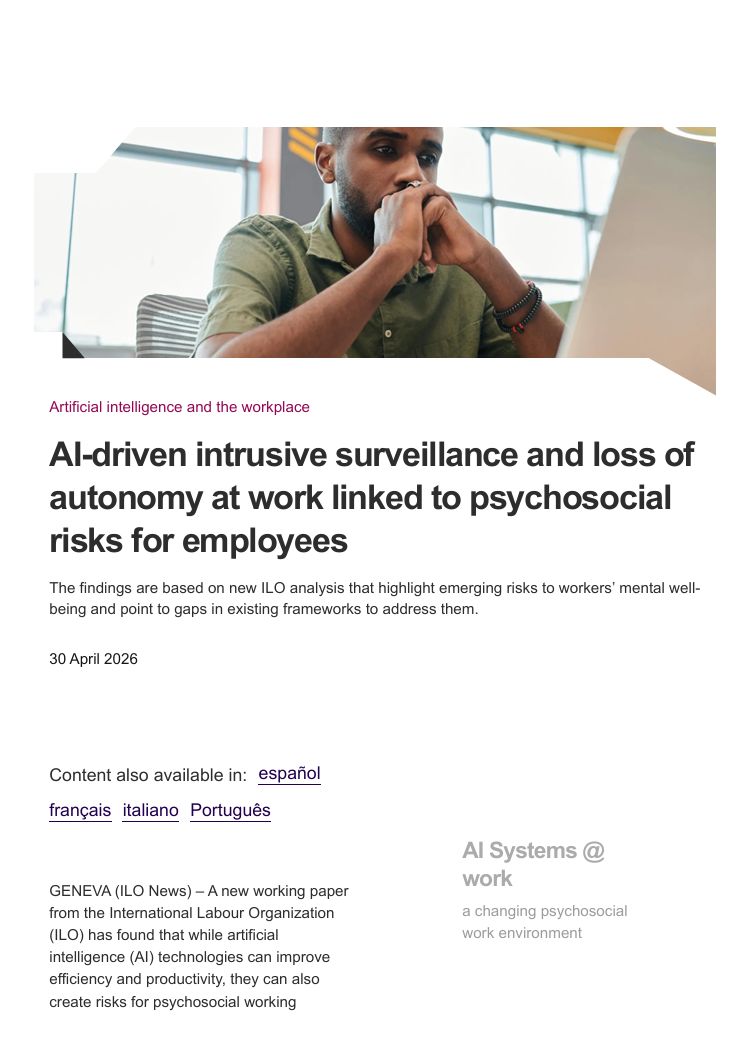
AI-driven intrusive surveillance and loss of autonomy at work linked to psychosocial risks for employees
ILO research finds AI-driven workplace surveillance and reduced employee autonomy may heighten psychosocial risks, including stress, privacy concerns and work intensification. The paper highlights gaps in occupational safety frameworks and calls for integrated regulation covering labour rights, data protection and mental wellbeing.


