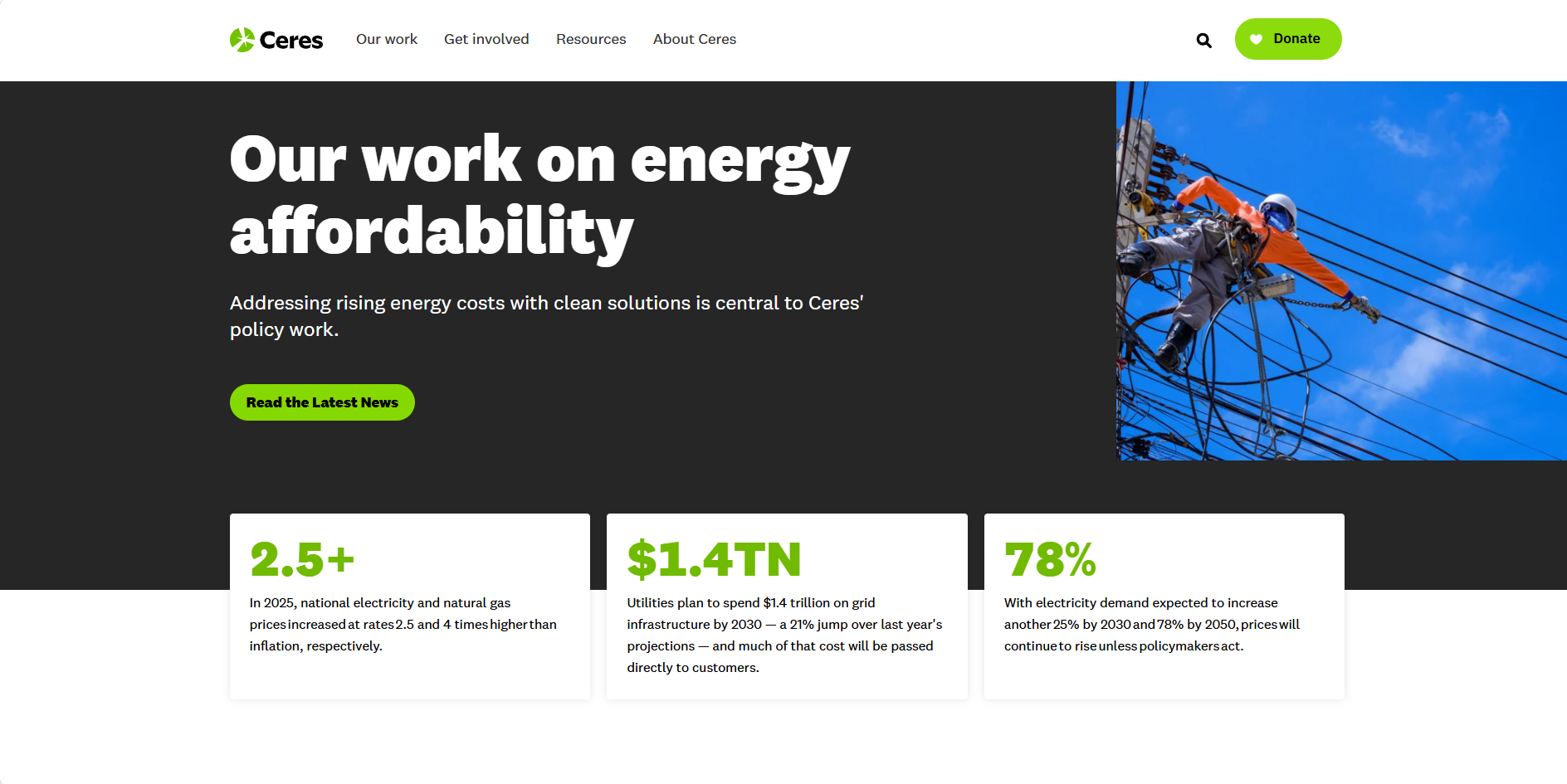
Ceres: Our work on energy affordability
A Ceres initiative and playbook focused on curbing rising energy prices through clean energy expansion, providing policymakers and investors with strategies for a modern, efficient, and affordable energy system.
Please login or join for free to read more.

OVERVIEW
Ceres: Our work on energy affordability is a policy advocacy resource and strategic framework designed to address rising energy prices through clean energy expansion. The initiative aims to support more resilient and efficient energy systems by advocating for specific legislative reforms. Finance professionals can use this resource to understand the policy drivers affecting utility costs and the broader transition toward a modernised electric power landscape.
Organisation behind the tool
Ceres is the primary organisation behind this work. It is a non-profit sustainability organisation that works with influential networks of investors and companies to drive solutions across the economy, particularly in the electric power, banking, and insurance sectors.
What the tool does
The resource functions as an advocacy hub and strategic guide. Key features include:
- The Powering Affordability Playbook, which provides three core strategies for policymakers to curb energy prices.
- Access to sign-on letters and advocacy frameworks endorsed by leading businesses and investors.
- Analysis of policy solutions intended to foster a more resilient, efficient, and clean energy system.
- Updates on legislative activity in various state legislatures aimed at expanding clean energy access.
Target audience
The primary audience includes state-level policymakers, institutional investors, and large corporate energy users. It is also relevant for sustainability professionals and researchers focusing on energy policy and utility regulation.
Relevance to finance professionals
- Risk assessment – Understanding how energy affordability challenges and legislative changes may impact the financial stability of electric utilities and their ratepayers.
- ESG analysis – Evaluating how companies manage energy costs and transition risks through participation in clean energy programmes.
- Investment context – Gaining insights into the long-term economic trends associated with grid modernisation and the shift away from fossil fuels.
- Market insights – Monitoring how state-level policies influence the price and availability of energy for commercial and industrial sectors.