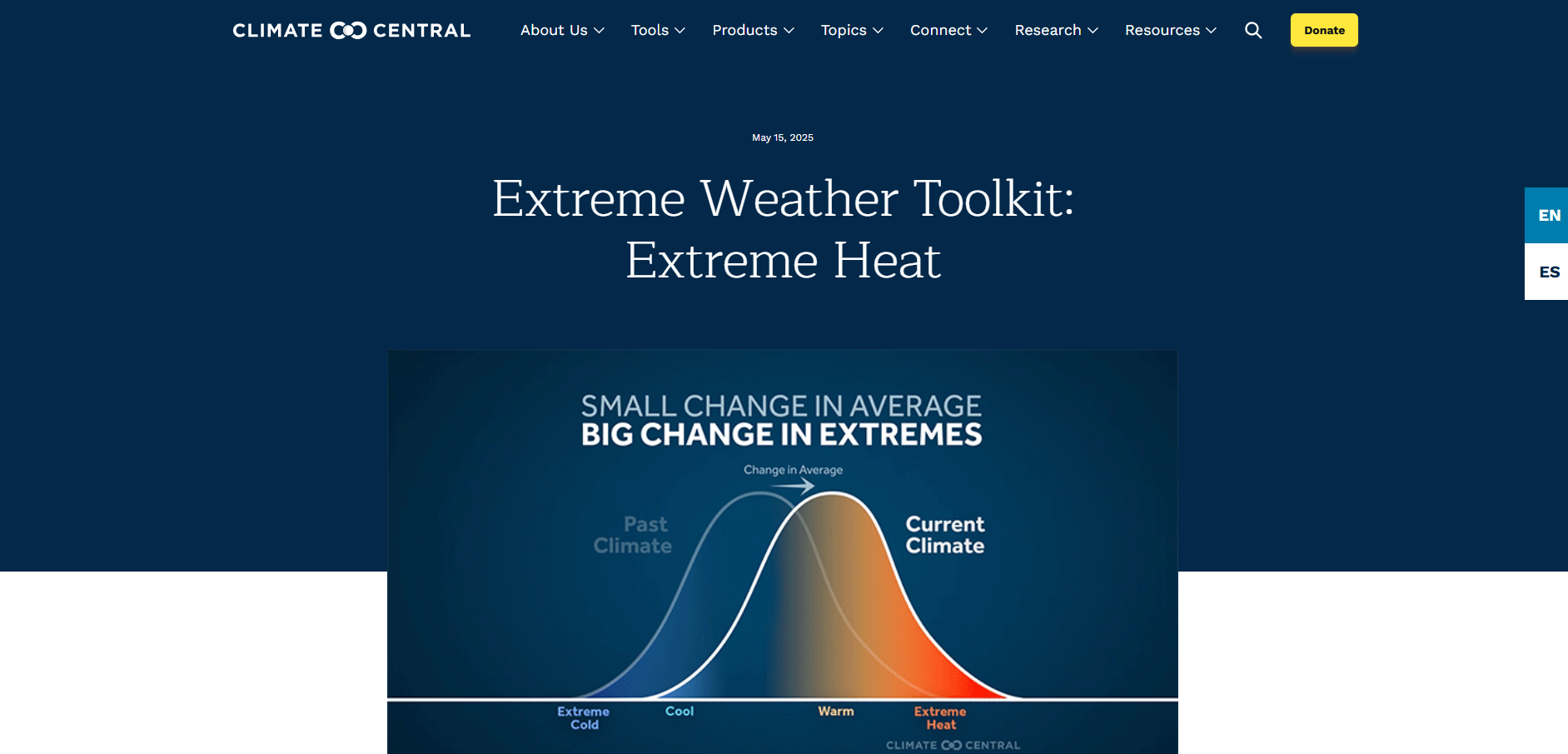
Extreme Weather Toolkit: Extreme Heat
A resource hub from Climate Central providing data, analysis, and visualisations on the trends and local impacts of extreme heat, including the Climate Shift Index and urban heat island studies.
Please login or join for free to read more.

OVERVIEW
The Extreme Weather Toolkit: Extreme Heat is a comprehensive resource hub designed to help professionals understand and communicate the rising risks of extreme heat. Produced by Climate Central, the toolkit centralises scientific data and analysis regarding the frequency, intensity, and local impacts of heatwaves across the United States and globally. This resource is particularly relevant for finance professionals looking to understand the physical risks of climate change on specific metropolitan areas and labour forces.
Organisation behind the tool
The toolkit is developed and maintained by Climate Central, an independent group of scientists and communicators who research and report the facts about our changing climate and its impact on the public.
What the tool does
The toolkit provides a suite of analytical resources and visualisations, including:
- The Climate Shift Index, which quantifies the influence of human-caused climate change on daily temperatures.
- Analysis of urban heat islands in 65 major U.S. cities, identifying neighbourhoods where built environments amplify temperatures.
- Trend reports on summer warming and the increasing frequency of risky heat days in over 230 U.S. locations.
- Research on humid heat risks specifically impacting weather-exposed workers.
- Downloadable graphics and data summaries for use in reports and presentations.
Target audience
The primary audience includes journalists, researchers, policymakers, and professionals in health and safety, though the data is publicly available for the general public.
Relevance to finance professionals
Finance professionals can apply these resources to:
- Risk assessment – evaluating physical risk for real estate and infrastructure assets, specifically identifying vulnerability to urban heat island effects.
- ESG analysis – utilizing local-level climate data to inform corporate sustainability reporting on environmental hazards.
- Market/commodity insights – assessing the impact of rising temperatures on agricultural productivity and ecosystem health.
- Investment context – understanding the long-term economic implications of increased heat-related illnesses and their effect on labour productivity and worker safety.