Adaptbase Search
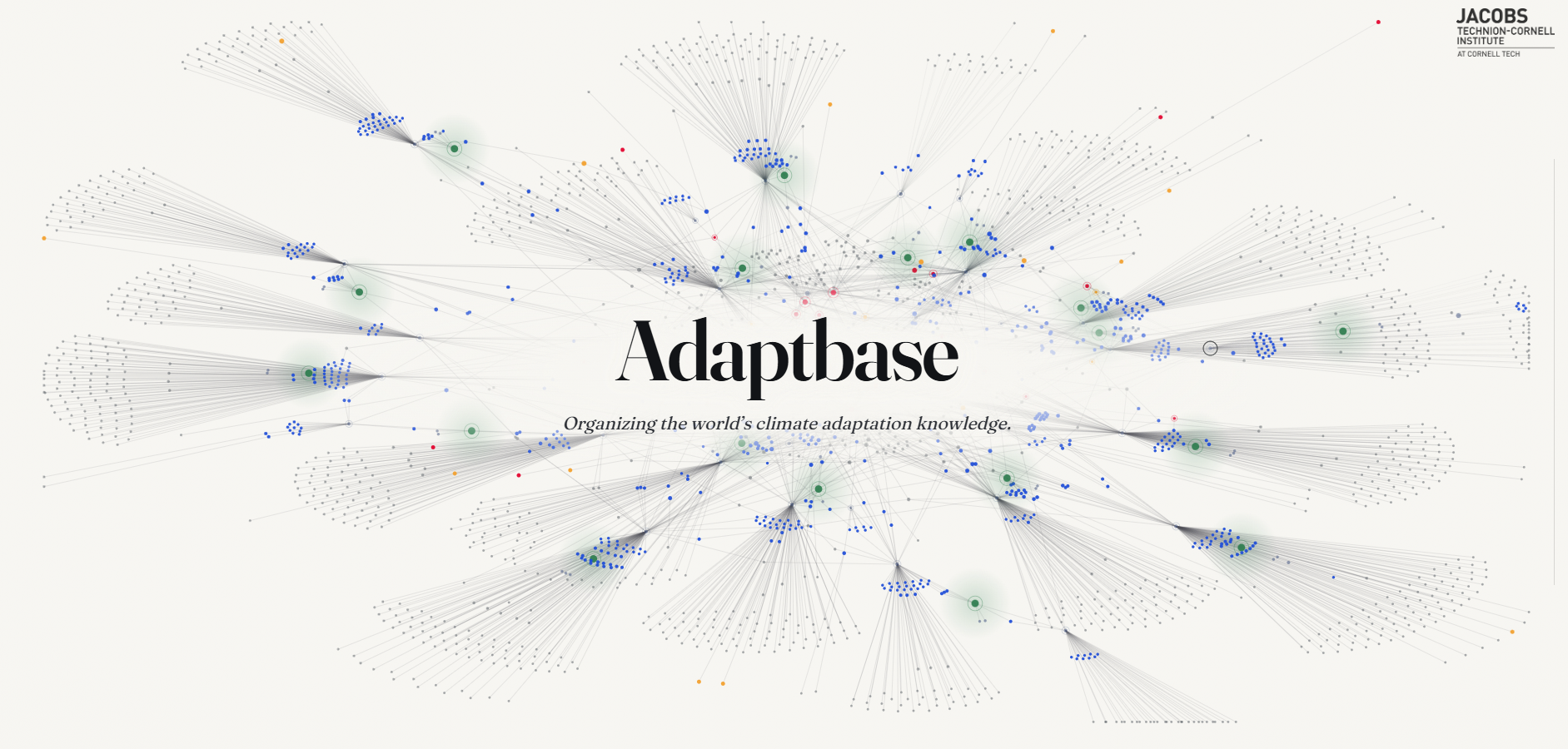
Adaptbase Search is an AI-powered knowledge base that structures climate adaptation data from global city plans. It allows finance professionals to track urban resilience investments, benchmark city responses to climate hazards, and verify adaptation claims through a standardised knowledge graph of actions and outcomes.
Please login or join for free to read more.

OVERVIEW
Adaptbase Search is a climate adaptation knowledge base that utilises AI agents to extract and structure evidence from urban adaptation and resilience plans globally. It provides finance professionals with a rigorous, standardised way to analyse how cities are planning for and responding to climate hazards, moving beyond unstructured PDF documents into a searchable knowledge graph.
Organisation behind the tool
The tool is developed and maintained by Adaptbase. It uses an ontology developed in collaboration with adaptation and resilience experts to ensure data is categorised in a standardised, technical format.
What the tool does
- Catalogues thousands of climate adaptation actions and solutions from over 100 plans across nearly 90 cities.
- Organises data into a knowledge graph that connects solutions, mechanisms, and specific city actions.
- Allows users to search for specific interventions, such as green infrastructure, building retrofits, or flood defences, and view their implementation status.
- Provides an archive of source documents, ensuring every data point is traceable to a specific page and sentence in a city plan.
- Offers an ontology viewer to help users understand the shared vocabulary of 21 entity types and 60 relationship types used in climate adaptation.
Target audience
The primary users include infrastructure investors, businesses, urban planners, and climate advocates seeking to benchmark city progress or research specific adaptation solutions.
Relevance to finance professionals
- Risk assessment – Identify city-level exposure to hazards such as extreme heat, storms, and sea-level rise, and evaluate the specific actions being taken to mitigate these risks.
- ESG analysis – Track reported outcomes and co-benefits of climate projects, such as public health improvements or social cohesion metrics, which are often tied to sustainability reporting.
- Investment context – Gain insights into the trillion-dollar climate adaptation market by identifying which technologies and infrastructure projects are being prioritised in municipal budgets and plans.
- Market/commodity insights – Understand trends in urban resource management, including water storage, energy-efficient building retrofits, and nature-based solutions.