

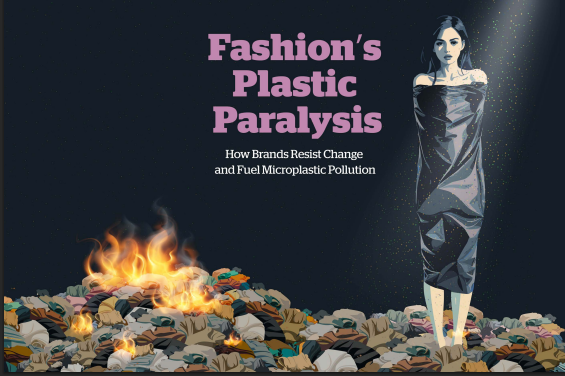
Fashion’s plastic paralysis: How brands resist change and fuel microplastic pollution
The report examines fashion brands’ continued reliance on synthetic fibres, highlighting how voluntary commitments, lobbying, and weak accountability delay fibre reduction and regulation. It links current business models to rising microplastic pollution and concludes that systemic policy and production changes are required.
Please login or join for free to read more.

OVERVIEW
Background: Fashion’s addiction to synthetic fibres
The report finds that fast fashion growth is driven by cheap synthetic fibres, particularly polyester, which now accounts for 56% of all textiles and over two-thirds of fibre production globally, projected to reach 73% by 2030. Polyester costs roughly half as much as cotton, encouraging high-volume, low-quality production. Synthetic fibres are fossil-fuel derived and generated around 125 million tonnes of CO₂e in 2022. Clothing made from synthetics is often discarded after fewer than ten wears, with large volumes exported to the Global South, effectively shifting plastic waste and pollution abroad.
Microplastics: A growing threat to environmental and human health
Synthetic textiles are a major source of microplastic pollution, responsible for an estimated 35% of microplastics entering oceans. Around 8.3 million tonnes of plastic pollution from apparel were generated in 2019. Microplastics have been detected in human organs and tissues, with emerging evidence linking them to inflammation, respiratory harm and broader health risks. The report distinguishes microplastics from natural microfibres, emphasising that plastic particles persist, accumulate and pose greater environmental and health threats.
How are brands addressing microfibre release?
Approaches to microfibre pollution remain weak. Forty-four percent of brands fall into a “red zone”, having no substantive policies beyond consumer advice or washing-machine filters. Many rely on voluntary initiatives such as The Microfibre Consortium, which the report finds insufficient and prone to delaying action. End-of-pipe solutions dominate, while preventative measures, including reducing synthetic fibre use, are largely absent.
Positioning on EU legislation and international treaties
Brand support for regulation is limited. Only 22% of companies backed all proposed EU measures on microplastics, and support is often not substantiated publicly. Just 55% support a global plastics treaty mandating reductions in plastic-based materials. Resistance is strongest where regulation would link fees or design criteria to production volumes, directly challenging fast fashion business models.
Conclusion
The report concludes that the fashion industry remains structurally dependent on synthetic fibres and is employing delay and distraction tactics similar to those used by fossil fuel industries. Weak voluntary action, limited transparency and resistance to regulation risk prolonging environmental, health and financial impacts, with growing investor scrutiny and divestment already evident.
Recommendations
The report calls for time-bound targets to reduce fossil-fuel-based materials, measures to cut microfibre pollution at source, support for robust EU and global regulation, and a shift away from high-volume fast fashion towards reduced production and genuine material substitution.




