PSLifestyle tests: Circular action impact data
PSLifestyle is a data-driven carbon footprint tool developed by Sitra and EU partners. It tracks circular lifestyle choices across Europe, offering finance professionals unique insights into consumer behaviour, ESG trends, and the market transition towards a circular economy.
Please login or join for free to read more.

OVERVIEW
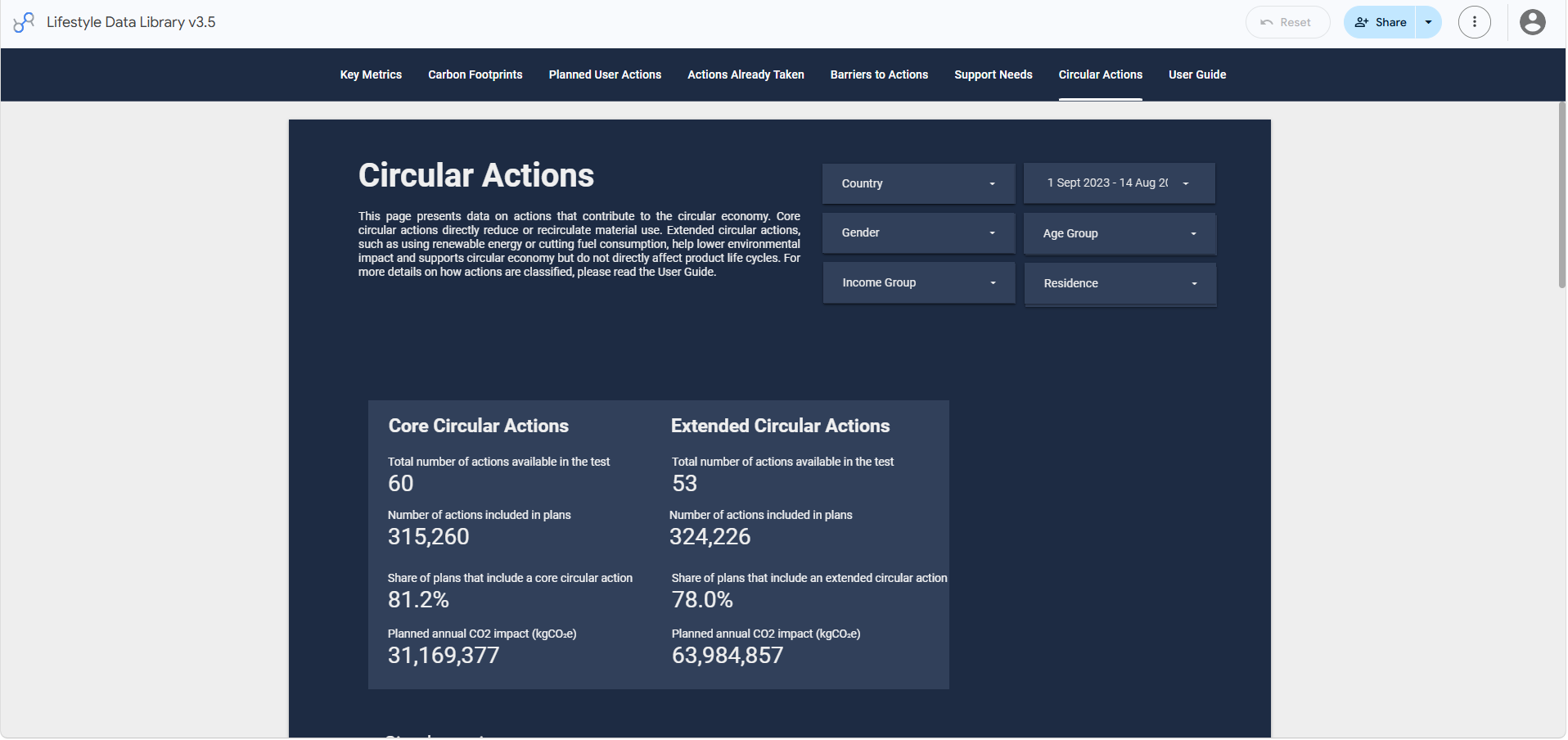
The PSLifestyle Tests: Circular Action Impact Data is a digital tool and dataset based on a carbon footprint calculator designed to encourage sustainable and circular living. It allows users to assess their environmental impact and provides insights into how lifestyle choices contribute to carbon footprints across European countries. Finance professionals can use this data to understand consumer behaviour shifts and the potential market demand for circular economy products and services.
Organisation behind the tool
The tool was developed by Sitra (the Finnish Innovation Fund) in collaboration with the PSLifestyle project consortium, which includes partners such as CSCP gGmbH, Circular Change, EuroHealthNet, and ICLEI Europe. The project received funding from the European Union to mobilise citizens across eight to ten European countries.
What the tool does
The tool provides the following features:
- A web-based carbon footprint calculator that assesses daily lifestyle impacts across categories like housing, transport, and food.
- Interactive dashboards (via Google Data Studio) that visualise circular action impact data.
- Comparative data on sustainable living choices from over half a million participants across Europe.
- Downloadable insights on the “action gap” between climate awareness and practical lifestyle changes.
Target audience
The primary audience includes European citizens, researchers, and policymakers. It is also highly relevant for businesses and sustainability analysts seeking to understand consumption-driven environmental impacts.
Relevance to finance professionals
Finance professionals can apply the insights from this tool in several areas:
- Risk assessment – identifying sectors most vulnerable to changing consumer preferences regarding high-carbon lifestyles.
- ESG analysis – using large-scale citizen data to inform social and environmental metrics in circular economy reporting.
- Market/commodity insights – gaining data-driven perspectives on emerging trends in sustainable food, energy, and infrastructure consumption.
- Investment context – evaluating the scalability of circular business models based on documented citizen willingness to adopt sustainable actions.