

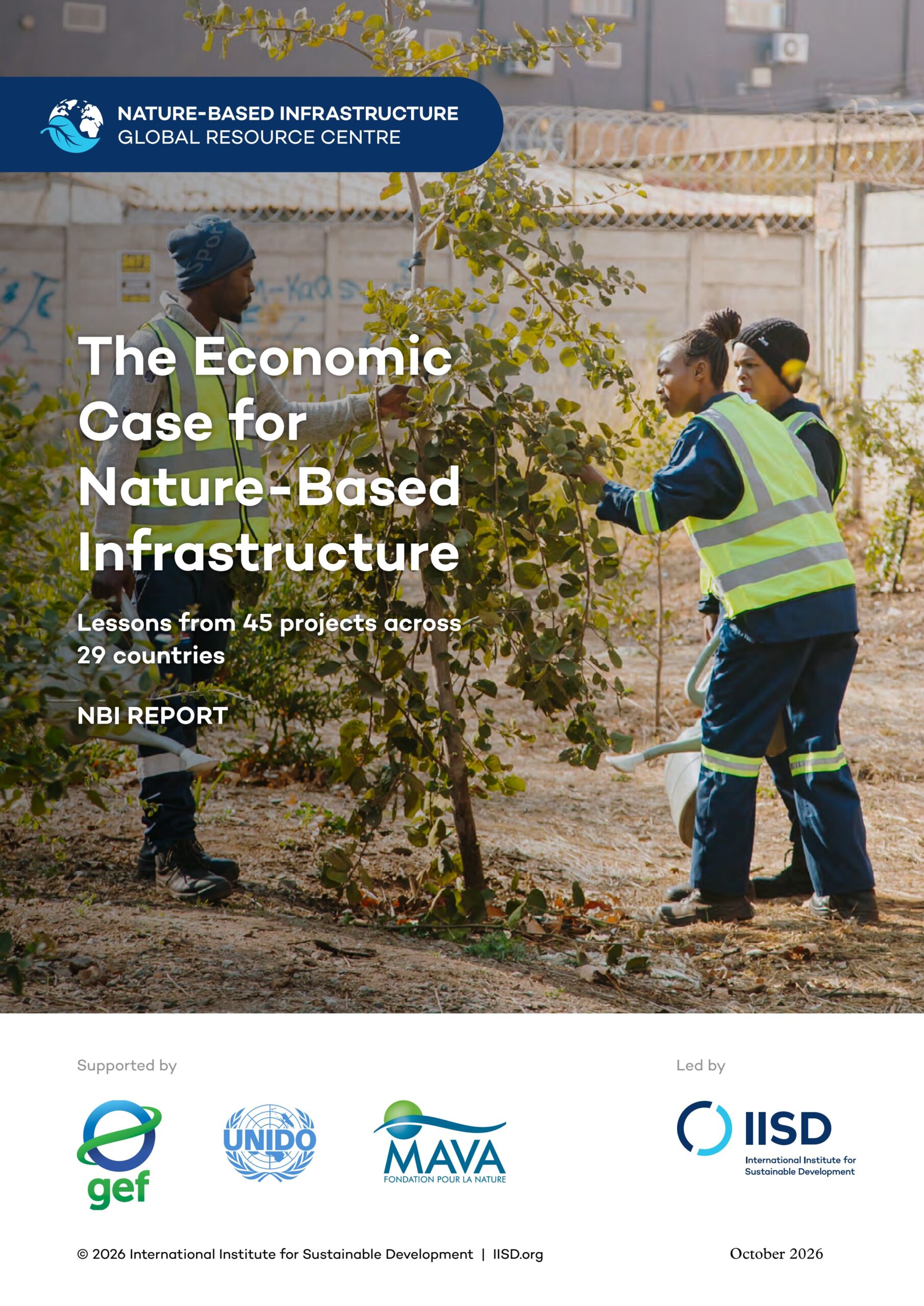
The economic case for nature-based infrastructure: Lessons from 45 projects across 29 countries
This report synthesises 45 assessments across 29 countries to demonstrate the economic case for nature-based infrastructure. It reveals a median benefit-to-cost ratio of 3.21 and an internal rate of return of 38%. The study recommends reforms in public finance and planning to overcome institutional barriers and scale investment.
Please login or join for free to read more.

OVERVIEW
This report synthesises evidence from 45 assessments conducted by the Nature-Based Infrastructure (NBI) Global Resource Centre. Over the past five years, the Centre has supported projects in 29 countries, reaching 8.7 million direct beneficiaries and restoring nearly 1.9 million hectares of land. The analysis demonstrates that NBI offers a transformative, cost-effective alternative to conventional ‘grey’ infrastructure by integrating natural systems into engineered solutions to provide flood protection, water regulation, and climate resilience.
The importance of building with nature
Humanity faces intertwined crises of accelerating climate change and rapid biodiversity loss, with global temperatures approximately 1.55°C above pre-industrial levels. Traditional infrastructure often exacerbates these problems through environmental degradation and high emissions. In contrast, NBI integrating ecological processes, such as water filtration by wetlands or temperature regulation by urban trees, can achieve equal or superior performance at a lower life-cycle cost. Research suggests NBI generates up to 30% more in value and added benefits compared to grey infrastructure.
The SAVi methodology
The assessments utilise the Sustainable Asset Valuation (SAVi) methodology, which combines qualitative systems mapping with rigorous quantitative modelling. Unlike traditional cost-benefit analyses that often exclude externalities, SAVi explicitly monetises ecosystem services, such as carbon sequestration and flood attenuation, alongside social co-benefits like health improvements and job creation. This holistic approach produces benefit-to-cost ratios (BCRs) and internal rates of return (IRR) that reflect real-world resilience and provide a transparent framework for comparing NBI with hybrid or grey alternatives.
How NBI delivers economic performance
Aggregated results across the 45 assessments show strong economic viability. NBI investments yield a median BCR of 3.21, meaning every dollar invested generates more than three dollars in societal benefits. The median IRR is 38%, surpassing typical returns in many infrastructure sectors. Performance varies by ecosystem: wetlands show the strongest economic returns with a median BCR of 3.88, while forests demonstrate the highest median IRR at 53%. Coastal projects have a lower median BCR of 2.13 but play an irreplaceable role in storm surge protection, with median net benefits reaching USD 7,900 per hectare per year.
Notable outliers highlight the potential for exceptional returns. For instance, an Indonesian forest restoration project delivered a BCR of 33.54, driven by avoided flood and erosion damages. In Ethiopia, an agroforestry project generated total benefits exceeding USD 674 billion against investment needs of USD 255 billion, reflecting cumulative impacts over 26 years. These results underscore that while NBI performance is context-dependent, the economic case remains consistently compelling.
How NBI delivers systemic benefits
NBI creates value by reinforcing interactions among hydrological, climatic, and socio-economic systems. Nature-based assets deliver multiple services simultaneously; for example, coastal wetlands reduce wave energy while providing habitats that support tourism and fisheries. Urban projects, such as the Medellín River Park, show how biophysical changes like increased tree cover map onto public health outcomes, including reduced mortality and improved walkability. However, the report cautions that climate stressors can undermine recovery if drivers like land conversion remain unmanaged.
How to secure financing for NBI
Financing currently depends overwhelmingly on public sources, which provided USD 197 billion for nature-based solutions in 2023, compared with USD 23.4 billion from private sources. A primary barrier is that NBI value is often captured as avoided costs or public co-benefits rather than direct project revenues. To improve bankability, the report suggests identifying specific beneficiaries who may be willing to pay for services. Examples include an Italian aquaculture company supporting wetland restoration to maintain seafood quality, and the use of outcome-based finance where buyers pay for verified results like improved water quality.
Implications for planning, governance, and financing of NBI
Scaling NBI requires institutional and financial reforms. The report recommends that governments place NBI on equal footing with grey infrastructure in procurement systems and climate plans. Budgeting rules should be reformed to recognise avoided future expenditures and ensure funding for operation and maintenance over the full life cycle of natural assets. Community co-design is also critical; involving local organisations strengthens project quality and long-term stewardship. Table 3 outlines a roadmap, including short-term actions to build stakeholder capacity and create standardised designs, and long-term goals to mainstream NBI as a distinct asset class.
Conclusion
NBI provides a compelling, evidence-based alternative to conventional infrastructure by delivering multiple services across sectors. While its technical performance is well-established, scaling depends on moving from valuation to implementation. By aligning policy, finance, and practice, NBI can shift infrastructure systems toward models that recognise nature as a foundational asset supporting long-term economic value and sustainable development.




