

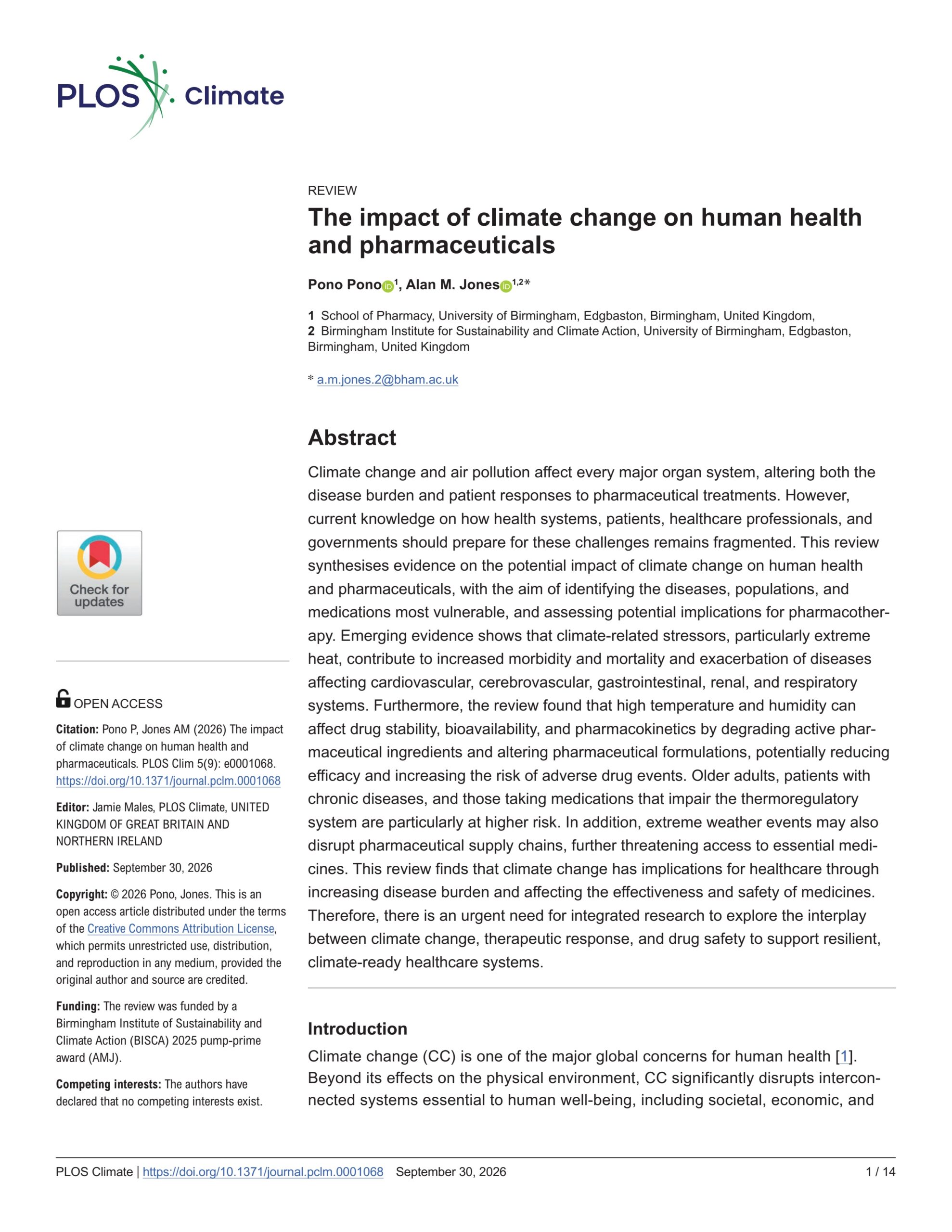
The impact of climate change on human health and pharmaceuticals
This research review examines how climate change and extreme weather increase morbidity across major organ systems. It highlights how rising temperatures and humidity compromise pharmaceutical stability and efficacy, particularly for vulnerable populations. The report calls for updated clinical guidelines and climate-resilient pharmaceutical regulations to safeguard public health.
Please login or join for free to read more.

OVERVIEW
Abstract
Climate change and air pollution affect every major organ system, altering disease burdens and patient responses to pharmaceutical treatments. This review synthesises evidence on the potential impacts of climate change on human health and pharmaceuticals, aiming to identify vulnerable diseases, populations, and medications. Emerging evidence shows that climate-related stressors, particularly extreme heat, contribute to increased morbidity and mortality across cardiovascular, cerebrovascular, gastrointestinal, renal, and respiratory systems. High temperatures and humidity can affect drug stability, bioavailability, and pharmacokinetics, potentially reducing efficacy and increasing adverse drug events.
Introduction
Climate change (CC) is a major global concern for human health, disrupting interconnected systems essential to well-being, including societal, economic, and healthcare systems. Human-induced CC has accelerated the frequency and severity of climate hazards and extreme weather events. The Intergovernmental Panel on Climate Change (IPCC) states it is unequivocal that human influence has warmed the atmosphere, ocean, and land, primarily through activities that emit greenhouse gases. These changes lead to rising sea levels and more frequent extreme weather events, including wildfires, floods, droughts, and heatwaves.
Major organ systems affected by climate change
Cardiovascular system
Both cold and hot temperatures are linked to an increased risk of acute myocardial infarction (MI). Cold temperatures have more pronounced effects on acute MI among females, while extreme cold weather significantly increases the incidence of ST-elevation myocardial infarction (STEMI) among males. Heat exposure is associated with increased hospitalisation risk for diseases affecting arteries, arterioles, and capillaries, as well as ischaemic heart disease. Wildfire smoke exposure also increases the risk of all-cause cardiovascular diseases, with individuals aged 65 and above at the highest risk for MI and ischaemic heart disease.
Cerebrovascular system
Studies found a positive association between high temperature and acute ischaemic stroke. Wildfire smoke exposure is associated with increased emergency visits for cerebrovascular issues, particularly among adults aged 65 and older. Conversely, low temperatures and higher maximum daily atmospheric pressure are associated with an increased incidence of aneurysmal subarachnoid haemorrhage. Ultraviolet radiation (UVR) shows a non-linear relationship with ischaemic stroke admissions, with both high and low UVR associated with reduced risks over a lag time of 0–10 days.
Respiratory system
Higher temperatures increase the risk of asthma hospitalisation and respiratory-related emergency room visits. Lower temperatures and sudden declines in temperature also significantly increase the risk of asthma exacerbations, particularly for males, individuals aged above 40 years, and those with a body mass index (BMI) above 25 kg/m2. Wildfire smoke is associated with significant decreases in peak flow measurements, with women and black patients experiencing the largest average decreases.
Renal system
Heat exposure consistently impairs renal function across occupational and community settings. It significantly reduces the estimated glomerular filtration rate (eGFR) among factory and farm workers. A community-based study found that exposure to ambient heat independently accelerates the decline in eGFR by –0.9% annually in individuals with established chronic kidney disease (CKD). Heat exposure is also linked to acute kidney injury (AKI) and new-onset albuminuria.
Gastrointestinal system
Sunshine exposure increases the risk of utilising medical care for gastroesophageal reflux disease (GERD) after a 6-day lag, while wind speed is associated with reduced healthcare utilisation after a 9-day lag. Extreme events like flooding significantly exacerbate or trigger new-onset irritable bowel syndrome (IBS). Heavy rainfall and higher temperatures are associated with an increased incidence of diarrhoeal disease among children. In intensive care settings, 18.5% of heatstroke patients developed at least one gastrointestinal symptom, such as nausea or bloody stools.
Mortality rate
High temperatures are consistently associated with increased risks of all-cause mortality, as well as mortality from type 2 diabetes, hypertension, and stroke. Cold temperatures increase the mortality rate from MI. Multiple climate variables beyond temperature, such as higher median air pressure and median humidity, also contribute significantly to increased cardiovascular mortality.
Direct impact of climate change on pharmaceuticals
Drug stability, pharmacokinetics, and pharmacodynamic changes
Extreme temperatures can directly alter the physicochemical properties of pharmaceutical products, accelerating degradation and reducing shelf-life. High humidity accelerates the degradation of hygroscopic medicines, potentially leading to dose dumping and adverse events. For instance, moisture-exposed carbamazepine tablets showed a reduction in mean dissolution from over 80% to 16% at 60 minutes. Improper storage of levothyroxine tablets in Italy was linked to refractory hypothyroidism. In resource-limited settings, heat-sensitive products like vaccines, insulin, and oxytocin are most at risk due to limited cold chain infrastructure.
Direct impact of climate change on human health in relation to pharmaceuticals
Heat exposure induces physiological responses, including increased heart rate and renal hypoperfusion, which modify drug absorption and excretion. Many individuals use medications that impair the thermoregulatory system or exacerbate dehydration. These include antidepressants, antipsychotics, anticonvulsants, benzodiazepines, diuretics, and antihypertensives. High ambient temperatures increase the risk of emergency visits for drug poisoning and substance use disorders involving opioids, alcohol, and cocaine. Heatwaves have also been associated with increased risks of hypotension in patients using nitroglycerine and hypoglycaemia in diabetic patients using subdermal insulin.
Policy implications, regulatory, and clinical practice
Climate-related stressors necessitate updating clinical guidelines to incorporate these risks into routine care. Clinicians should be trained to recognise drug classes that interfere with thermoregulation and consider temporary dose adjustments during heatwaves. National medicines regulatory agencies should review stability-testing, storage, and distribution requirements in line with projected environmental conditions. Regulatory authorities should also consider strengthening labelling requirements for medicines associated with thermoregulation dysfunction or heat-related adverse events.
Conclusions
Climate change poses a comprehensive threat to human health and pharmaceutical safety. Heat exposure is a primary driver of adverse outcomes across multiple organ systems and affects medication effectiveness by altering drug stability and pharmacokinetics. There is an urgent need for integrated, multidisciplinary research to support the development of climate-resilient healthcare and pharmaceutical systems.





