

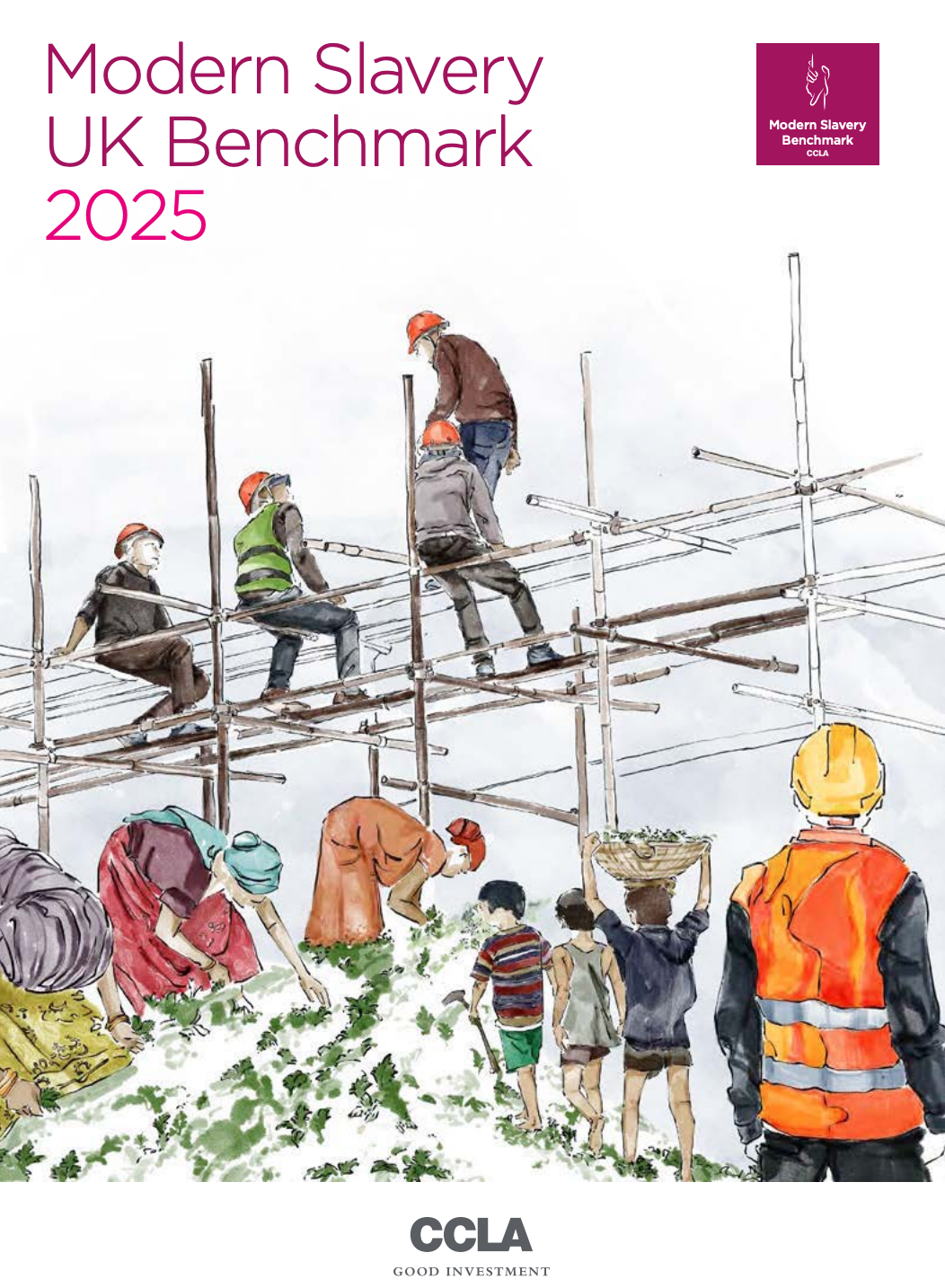
Modern slavery UK benchmark reports
The CCLA Modern Slavery UK Benchmark is an annual benchmark series assessing how major UK-listed companies disclose and act on modern slavery risks in their operations and supply chains, supporting investor engagement and improved corporate practice on human rights due diligence.
Please login or join for free to read more.

OVERVIEW
The CCLA Modern Slavery UK Benchmark series evaluates how the largest UK-listed companies are responding to the risks of modern slavery through policy, practice and disclosure, aligning corporate performance with statutory requirements and recognised human rights expectations.
This benchmark series is designed as an annual, comparative assessment tool for investors, civil society and companies themselves. It draws on the UK Modern Slavery Act 2015 requirements, the UK Home Office guidance on transparency in supply chains and internationally recognised human rights frameworks to define expectations for corporate disclosure and action.
Methodology
The benchmark is structured around a consistent five-section framework applied each year to the largest UK companies by market capitalisation. These sections examine:
- Modern Slavery Act compliance and registry — whether companies publish and register statements in line with statutory requirements.
- Conformance with government guidance — alignment with enhanced UK Home Office guidance on supply-chain transparency.
- Find it — the strength and transparency of human rights due diligence systems to identify modern slavery risks within operations and supply chains.
- Fix it — efforts to provide remedy to victims and address identified issues.
- Prevent it — measures taken to prevent future occurrences, including governance structures, procurement practices and embedding responsible policies.
This consistent structure allows year-to-year comparisons of corporate performance.
Companies are scored and placed into performance tiers that reflect their maturity in addressing modern slavery, creating a comparative benchmark that highlights leadership and gaps in practice. The benchmark process includes engagement with companies, offering them opportunities to respond and improve disclosures ahead of publication.
Use for finance professionals
- It provides an evidence base for stewardship and engagement, by indicating where companies fall short in human rights due diligence and where improvements have occurred over successive editions.
- It helps investors assess how corporate governance structures — including board-level oversight, risk management systems and supply-chain policies — are being operationalised in practice.
- It offers a comparative mechanism that can inform active ownership strategies, risk assessment and integration of human rights considerations in investment analysis.
- The benchmark’s alignment with statutory requirements and guidance on modern slavery makes it pertinent for understanding regulatory and compliance risk within the UK context.
Over time, editions have demonstrated progress and persistent gaps: for example, while more companies disclose finding incidents of modern slavery and improve governance, there remains significant room for improvement in remediation and prevention practices beyond compliance. The 2025 report noted that although many firms improved their scores compared with 2024, meaningful action beyond compliance and measurable outcomes is still limited across much of the market.
Overall, the CCLA Modern Slavery UK Benchmark series is a practical, investor-focused benchmarking tool that tracks corporate performance on modern slavery risks and supports engagement and transparency on human rights issues in supply chains.


