IGF country-commodity case studies series
This research series examines the environmental and social impacts of critical minerals extraction and processing, focusing on nickel, lithium and copper. Through country-specific case studies, it explores regulatory frameworks, resource management, biodiversity, human rights and labour conditions to inform sustainable mining practices and strengthen supply chain resilience during the energy transition.
Please login or join for free to read more.

OVERVIEW
Overview
Initiated in 2026, this research series by the Intergovernmental Forum on Mining, Minerals, Metals and Sustainable Development (IGF) examines the environmental and social impacts of critical minerals extraction and processing. It forms part of the broader project Bridging the Supply Gap: Leveraging and Sharing the Benefits of Minerals Needed for the Energy Transition.
The series focuses on nickel, lithium and copper mining across different geographical and regulatory contexts, examining extraction methods, socio-economic conditions and governance frameworks.
Purpose and scope
The series aims to strengthen critical mineral supply chain resilience and inform sustainable mining practices by examining environmental and social challenges and associated policy measures.
It covers energy consumption, greenhouse gas emissions, water management, land use, biodiversity, waste management and pollution. It also explores Indigenous Peoples’ rights, community engagement, gender equality, labour conditions and occupational health and safety.
The research assesses the strengths and gaps in existing legislative, regulatory and institutional frameworks governing mining activities.
Methodology
The series adopts a country- and commodity-specific case study approach, drawing primarily on desk-based research. Sources include peer-reviewed academic literature, government publications, legislation, policy documents, corporate disclosures, institutional reports and news articles.
Where applicable, supplementary information is gathered through expert interviews and consultations with industry associations and civil society organisations. The research also draws on IGF’s country factsheets and commodity profiles to provide contextual information and facilitate comparisons across jurisdictions.
Relevance to finance professionals
Finance professionals can use the series to assess environmental, social and governance (ESG) risks associated with mining investments and critical mineral supply chains.
The research supports investment due diligence, responsible sourcing, corporate engagement and regulatory risk assessments. It also provides context for evaluating exposure to environmental liabilities, human rights risks, operational disruptions and sustainability considerations associated with financing the energy transition.
LINKS & ATTACHMENTS
-
Go to source

-
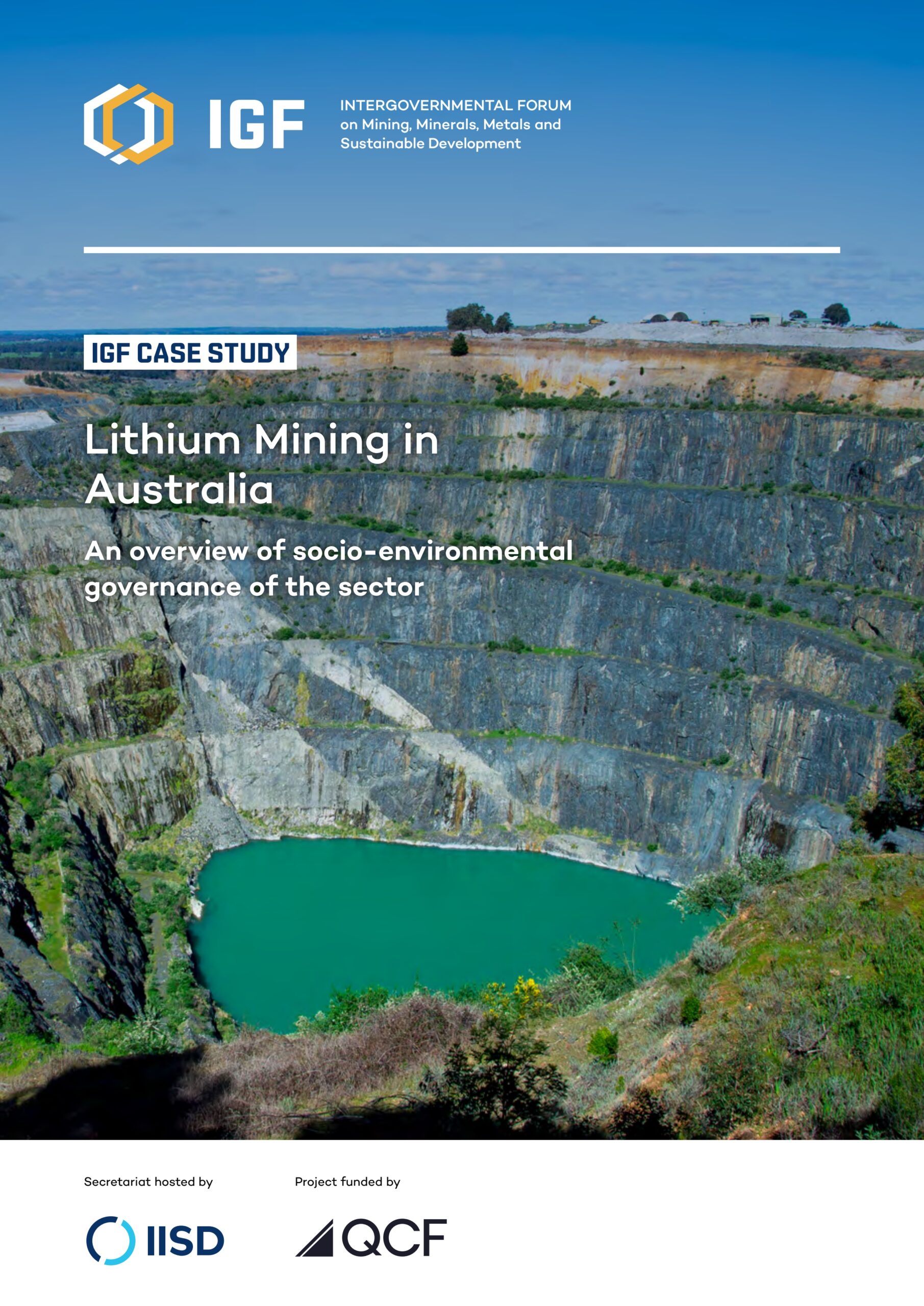
3829 - 2026 - Lithium mining in Australia: An overview of socio-environmental governance of the sector
-
3829 - 2026 - Lithium mining in Chile: An overview of socio-environmental governance of the sector
-
3829 - 2026 - Copper mining in the Democratic Republic of the Congo: An overview of socio-environmental governance of the sector
-
3829 - 2026 - Copper mining in Peru: An overview of socio-environmental governance of the sector
-
3829 - 2026 - Nickel mining in Indonesia: An overview of socio-environmental governance in the sector
-
3829 - 2026 - Nickel mining in Ontario, Canada: An overview of socio-environmental governance in the sector